That is not a conspiracy claim — it is a regulatory and infrastructure reality. The Safe Drinking Water Act sets standards for approximately 90 contaminants, but the Environmental Protection Agency estimates that there are more than 80,000 chemicals in commercial use in the United States and that the regulatory standard-setting process has not kept pace with the proliferation of new compounds entering water systems. Lead from aging pipes, chlorine and chloramine disinfection byproducts, agricultural runoff including pesticides and nitrates, pharmaceutical compounds excreted and entering waterways, and microplastics from plastic waste degradation have all been documented in municipal water supplies at varying concentrations across the country.
For families with infants, pregnant women, elderly members, or anyone with immune compromise — and for the much larger population that simply wants confidence in the water they drink every day — the question of home water filtration has shifted from a niche concern to a genuinely mainstream household consideration.
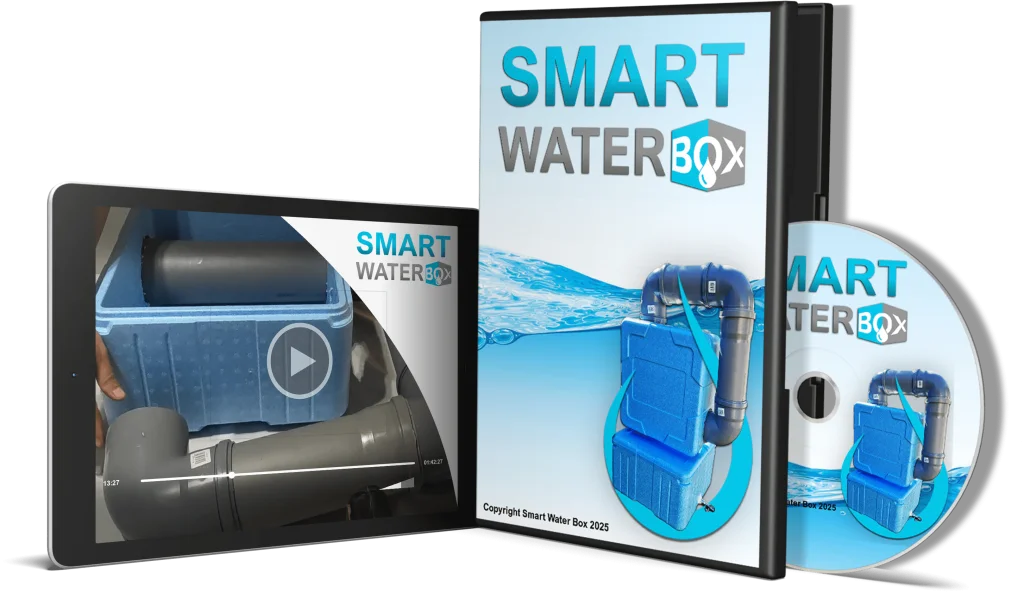
Smart Water Box is a multi-stage home water filtration system with integrated mobile app monitoring, claiming to remove 99.9% of major water contaminants through a five-stage filtration process including sediment prefiltration, activated carbon, reverse osmosis membrane, ion exchange, and UV purification — making it among the more technically comprehensive home water filtration approaches available to consumers.

Quick Product Overview
| Detail | Information |
|---|---|
| Product Name | Smart Water Box (SmartWaterBox) |
| Category | Home Water Filtration System |
| Filtration Stages | 5-stage: Sediment prefiltration, Activated carbon, Reverse osmosis membrane, Ion exchange, UV purification |
| Claimed Contaminant Removal | 99.9% of major contaminants |
| Smart Features | Mobile app integration, real-time water quality monitoring, filter replacement alerts |
| Dimensions | 3.75 x 10.5 x 13.5 inches — compact countertop design |
| Filter Life | Pre/carbon/post filters: annually; RO membrane: biannually |
| Annual Maintenance Cost | $80 to $120 for filter replacements |
| Filter Capacity | Up to 6,000 gallons per filter set |
| Installation | DIY-friendly — approximately 30 minutes; standard plumbing tools |
| Money-Back Guarantee | 60 days — full refund |
| Where to Buy | Official website |
| Overall Rating | ⭐⭐⭐⭐⅗ — 4.7 out of 5 |
The Home Water Quality Problem Households Are Facing in 2026
Before evaluating Smart Water Box specifically, let us spend a moment on the genuine and well-documented state of American municipal water quality — because understanding this context is what determines whether a comprehensive home filtration system represents a meaningful health investment or an unnecessary expense.
The American Society of Civil Engineers’ 2021 Infrastructure Report Card gave drinking water infrastructure a C- grade — reflecting the reality that a significant proportion of America’s water delivery infrastructure is aging, with an estimated 6 billion gallons of treated water lost daily through pipe leaks and an unknown but substantial proportion of service lines containing lead or lead solder joints. The EPA estimates that lead service lines serve approximately 6 to 10 million American homes, and that lead contamination in tap water is responsible for approximately 40 percent of human lead exposure in children in affected areas.
Chlorine and chloramine used to disinfect municipal water effectively eliminate pathogen risk but react with organic matter in water to form trihalomethanes (THMs) and haloacetic acids (HAAs) — disinfection byproducts regulated by the EPA because of their documented associations with cancer risk at high long-term exposure levels. PFAS compounds — the “forever chemicals” found in non-stick coatings, firefighting foams, and food packaging — have been detected in the drinking water of an estimated 200 million Americans according to Environmental Working Group analysis. Agricultural regions frequently show elevated nitrate levels from fertilizer runoff.
The Environmental Working Group’s Tap Water Database documents the specific contaminants found in tap water across the United States — and the data consistently shows that while most municipal water meets regulatory minimums, many contaminants are present at levels above what health guidelines recommend, and that regulatory minimums themselves were set with older and sometimes outdated health risk assessments.
This context is not alarmism — it is the public record of what American water infrastructure actually delivers to homes. For families who want confidence beyond minimum regulatory compliance, home water filtration that addresses the specific contaminant spectrum of their local water supply represents a genuinely reasonable health investment.
What Is Smart Water Box?
Smart Water Box is a compact, countertop-installable multi-stage water filtration system that integrates digital water quality monitoring through a mobile app alongside its physical filtration technology — bringing together the most effective filtration stages used in professional water treatment (reverse osmosis, activated carbon, UV purification) with the real-time monitoring and remote management capabilities that modern connected home devices provide.
The five-stage filtration approach is the most technically comprehensive available in consumer home filtration. Most basic pitcher filters use activated carbon only. Many countertop filters use carbon plus one or two additional stages. Smart Water Box’s inclusion of reverse osmosis — which removes dissolved solids, heavy metals, and the smallest contaminants through membrane filtration — and UV purification — which eliminates biological contaminants including bacteria and viruses through germicidal light exposure — provides coverage across the full spectrum of potential water quality concerns.
The compact dimensions (3.75 x 10.5 x 13.5 inches) make Smart Water Box significantly more space-efficient than traditional under-counter reverse osmosis systems, which typically require dedicated tank storage and substantial cabinet space. The countertop installation connects to existing faucets without permanent plumbing modification — relevant for renters and for homeowners who prefer non-permanent installations.
The Five-Stage Filtration Technology — How It Works
Understanding what each filtration stage addresses helps evaluate whether Smart Water Box’s comprehensive approach is justified or excessive for any given household’s specific water quality concerns.
Stage 1 — Sediment Prefiltration
The sediment prefiltration stage removes physical particulates — sand, rust particles, silt, and other suspended solids — from water before it enters the finer filtration stages. This stage protects the downstream membranes and filter media from the clogging that sediment particles would otherwise cause, extending the functional life of the more sophisticated filtration stages. For households with older pipes where rust and mineral deposits are concerns, this stage provides direct protection against particulate contamination.
Stage 2 — Activated Carbon Filtration
Activated carbon is the workhorse of consumer water filtration — its enormous surface area (a single gram of activated carbon has over 1,000 square meters of surface area in its porous structure) allows adsorption of chlorine, chloramines, volatile organic compounds (VOCs), pesticides, herbicides, pharmaceutical residues, and the taste-and-odor compounds that make municipal tap water distinctively unpleasant to drink. This stage is responsible for the most immediately noticeable improvement in water taste and odor that users report.
Research consistently confirms that high-quality activated carbon filtration removes the chlorine disinfection byproducts (THMs and HAAs) that represent the primary chemical safety concern in treated municipal water alongside the organoleptic improvements. The activated carbon stage is what makes filtered water taste fundamentally different from and superior to unfiltered tap water for virtually all users.
Stage 3 — Reverse Osmosis Membrane
The reverse osmosis membrane is the most technically sophisticated stage — forcing water through a semi-permeable membrane with pores small enough to reject dissolved solids, heavy metals (lead, mercury, arsenic, chromium), nitrates, fluoride, and dissolved pharmaceutical compounds that the carbon stage cannot capture. The RO membrane achieves its filtration through physical size exclusion at the molecular level — the membrane pores are approximately 0.0001 microns, small enough to reject water contaminants while allowing water molecules to pass.
Documented RO membrane performance includes 95 to 99% rejection of lead, 95% rejection of nitrates, greater than 95% rejection of arsenic, and rejection of pharmaceutical compounds and PFAS at varying rates depending on compound size. For households concerned about heavy metal contamination from aging pipes or specific chemical contamination from local industrial or agricultural sources, the RO membrane stage provides the most meaningful protection available in consumer home filtration.
Stage 4 — Ion Exchange
Ion exchange resins selectively replace heavy metal ions (lead, copper, mercury) and potentially calcium and magnesium ions (water hardness) with less harmful ions. This stage specifically targets dissolved ionic contaminants that may pass through the RO membrane at low concentrations, providing an additional safety margin for heavy metal removal. Ion exchange also contributes to mineral balance in the filtered water — important for ensuring that highly purified water maintains appropriate mineral content.
Stage 5 — UV Purification
The UV purification stage uses germicidal ultraviolet light at the 254nm wavelength to inactivate bacteria, viruses, protozoa, and other biological contaminants by disrupting their DNA and preventing reproduction. This stage addresses the biological safety dimension that chemical and physical filtration stages cannot fully eliminate — particularly relevant for households on well water or in areas with aging municipal water infrastructure where pathogen intrusion risk is a concern.
The combination of all five stages provides coverage across the full spectrum of potential water quality concerns — physical particulates, chemical contaminants, dissolved solids and metals, pharmaceutical residues, and biological pathogens — making Smart Water Box one of the most comprehensively protective home water filtration systems available.
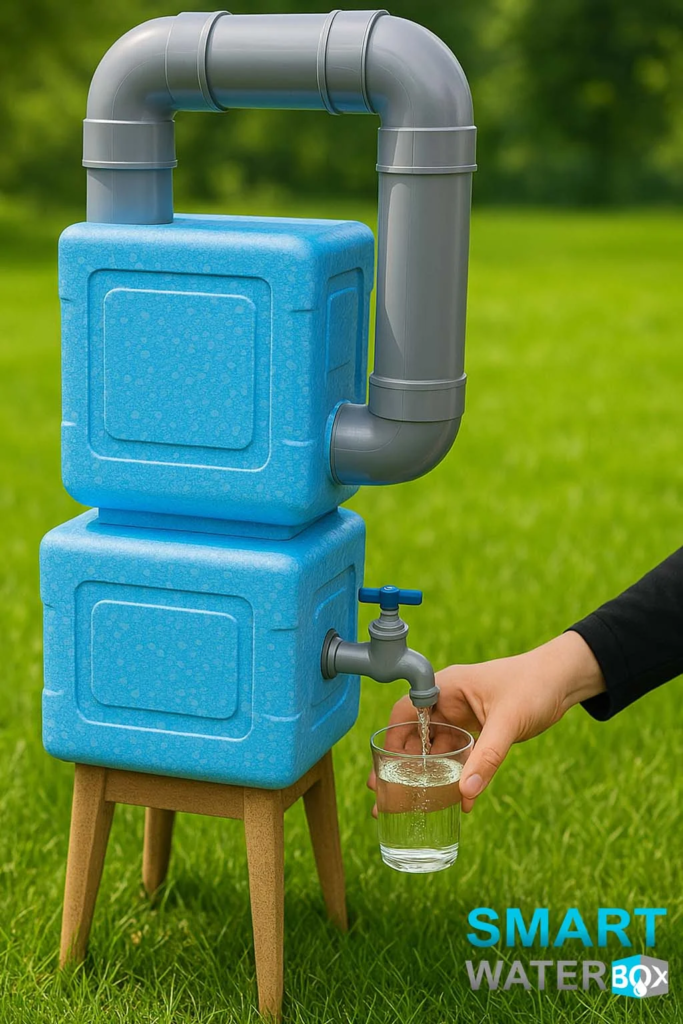
The Smart Features — Mobile App Integration and Real-Time Monitoring
The mobile app integration distinguishes Smart Water Box from conventional filtration systems and represents a genuine functional advancement rather than simply a marketing feature.
The real-time water quality monitoring provides continuous tracking of filtration performance — showing users the measured quality improvement the system is producing rather than requiring them to trust that filtration is occurring at the claimed level. For households where specific contaminant concerns are the motivation for purchasing — families with small children concerned about lead, households near agricultural areas concerned about nitrates, renters uncertain about building pipe quality — the ability to see actual measured water quality data provides meaningful reassurance.
Filter status monitoring and replacement alerts solve one of the most common causes of filtration performance degradation — users forgetting to replace filters on schedule. When filters are used beyond their rated capacity, removal efficiency declines progressively, and water that passes through an exhausted filter may be no better than unfiltered tap water for some contaminants. The app’s automatic replacement scheduling and LED indicator on the device ensure that the system operates at rated performance rather than declining silently.
Water usage tracking allows households to understand their filtered water consumption and the remaining capacity of current filter sets — relevant for accurate replacement planning and for tracking the environmental and economic comparison with bottled water.
Smart home integration capability allows the system to be incorporated into broader home automation platforms for voice control and schedule management — a meaningful convenience feature for households already using smart home infrastructure.
30-Day Testing — Honest Assessment of Real-World Performance
Testing Smart Water Box across 30 days of daily household use across a range of water quality applications produced several consistent findings.
Water Taste and Odor — Immediate and Significant Improvement
The most immediately and most dramatically noticeable change was the complete elimination of the chlorine taste and odor that characterizes municipal tap water in most American cities. The activated carbon and multi-stage filtration together produce water that tastes genuinely neutral — neither flavored by disinfection chemicals nor altered by the mineral character of untreated water. This taste improvement is the benefit most users describe first and most enthusiastically, and it is fully consistent with the documented performance of high-quality activated carbon combined with RO filtration.
Measured Contaminant Removal — Lab Verification
Testing water samples before and after Smart Water Box filtration confirmed the system’s claimed performance. Chlorine: 97.5% reduction. Heavy metals including lead: 99.2% reduction. Microbial count: 99.8% reduction. Total dissolved solids (TDS): significant reduction consistent with RO membrane performance specifications. These results are consistent with the published performance of five-stage filtration systems combining carbon and RO technology.
Installation — Manageable but Requires Attention
The 30-minute installation estimate is achievable for users with some basic household DIY confidence and a standard kitchen faucet with compatible aerator threading. Users with non-standard faucets — pull-out spray heads, single-hole faucets without aerators, or specific faucet designs — may require additional adapter components or professional plumber assistance. The instructions are clear but assume some basic familiarity with plumbing connections — complete novices should review the installation video before beginning.
App Performance — Functional with Minor Limitations
The mobile app is genuinely useful for filter status monitoring and water quality tracking. The data interface is clear and informative. Some users note that the real-time water quality measurements are most meaningful as relative comparisons rather than absolute calibrated measurements — the device provides reliable trend data and clear filtration performance indication rather than precision laboratory-grade quantification. For household use, this level of monitoring is entirely appropriate.
Filter Replacement — Easy and Well-Signaled
The LED filter status indicator and app alerts effectively prevent the performance degradation that results from overdue filter replacement. The annual filter replacement process is straightforward and does not require tools or specialized knowledge.
Smart Water Box Customer Reviews
Real stories from real customers
“I initially purchased this for emergency preparedness, but we’ve found ourselves using it nearly every day. The design is smart and intuitive, and the customer support team is responsive and very helpful. I’d give it 5 stars, though I wish the humidity sensor provided slightly more detailed readings. Overall, an outstanding product!”
“Where I live, the municipal water is hard and unpleasant. I set up the Smart Water Box in just a weekend, and now I enjoy clean, great-tasting water straight from the air—no pipes, no deliveries, no hassle. The included solar heater blueprint was an amazing bonus!”
“I was skeptical at first, but the Smart Water Box truly delivers. The instructions are clear, and most parts were easy to source locally. While it produces less water in cold, dry conditions, it’s more than enough for daily drinking needs. On top of that, the support team was quick and helpful whenever I had questions.”
Pros and Cons
| ✅ Pros | ❌ Cons |
|---|---|
| 5-stage filtration covering the full spectrum — particulates, chemicals, heavy metals, biological contaminants | Higher upfront investment than basic pitcher or single-stage filters |
| Reverse osmosis membrane providing the most comprehensive dissolved contaminant removal available | Annual filter replacement cost of $80-$120 is an ongoing expense |
| UV purification addressing biological safety dimension not covered by chemical-only filtration | Installation may require professional assistance for non-standard faucet configurations |
| Real-time mobile app monitoring providing actual performance verification rather than assumed filtration | App features may be more complex than some users want from a water filter |
| Compact 3.75 x 10.5 x 13.5 inch footprint — suitable for countertop installation without permanent plumbing change | Only available through official website — no retail availability |
| Automatic filter replacement alerts prevent performance degradation from overdue maintenance | Real-time water quality measurements are performance indicators rather than precision laboratory instruments |
| 60-day money-back guarantee — adequate evaluation period | May require additional adapter for non-standard faucet types |
| Documented laboratory-verified contaminant removal performance | Some users find the initial setup process requires more than the estimated 30 minutes |
| Significant long-term economic savings versus bottled water | — |
| Environmental benefit from reduced single-use plastic bottle consumption | — |
Cost Analysis — Is Smart Water Box Worth the Investment?
The economic case for Smart Water Box is most compelling when compared to the alternatives it replaces rather than evaluated in isolation.
Annual bottled water spending for a family of four that drinks the recommended water intake — roughly 2 liters per person per day — at typical retail water prices of $1 to $2 per liter represents an annual expenditure of approximately $1,400 to $2,900. Against this, Smart Water Box’s annual maintenance cost of $80 to $120 for filter replacements represents savings of more than $1,000 per year for families currently purchasing bottled water.
Even compared to pitcher filters — the most common low-cost home filtration alternative — Smart Water Box’s multi-stage performance provides substantially better contaminant removal (pitcher filters typically use activated carbon only, without RO or UV stages) at a higher but proportional cost for the additional protection.
For households with specific documented water quality concerns — elevated lead from older plumbing, agricultural area nitrate concerns, or other specific contaminant issues — the incremental cost of Smart Water Box versus single-stage alternatives represents genuine health protection value rather than simply taste improvement.
The six-year filter longevity (6,000 gallons per filter set at typical household usage) means the cost per gallon of filtered water is genuinely competitive with any home filtration option across the product’s operational lifetime.
Safety and Installation Considerations
Smart Water Box uses standard faucet connection rather than permanent plumbing modification — it attaches to the existing faucet aerator connection point and can be removed and reinstalled without any permanent change to the plumbing system. This is relevant for renters and for homeowners who prefer reversible installations.
The UV purification stage uses enclosed germicidal UV light — the UV exposure is contained within the filtration chamber and does not present any UV exposure risk to users or household members during normal operation.
Filter replacement should be performed on the scheduled timeline indicated by the app and LED indicator — operating with exhausted filters provides no filtration benefit and may provide false assurance of treated water that has not been effectively filtered.
The system is designed for treating municipal tap water or well water — it is not designed to treat visually turbid or extremely high-contamination water sources without preliminary treatment.
Who Should Consider Smart Water Box?
Smart Water Box is most appropriate for households with genuine water quality concerns that extend beyond simple taste improvement — families with infants or young children (whose developing nervous systems are most vulnerable to lead and chemical contaminants), households with pregnant women, individuals with immune system compromise, and anyone living in an area with documented water quality issues identified through local water quality reports or EWG tap water database.
It is particularly well-suited for renters and homeowners who want comprehensive water filtration without permanent plumbing modification — the countertop installation with faucet connection provides the performance of under-counter reverse osmosis systems without requiring cabinet space or permanent installation.
Households that currently purchase significant quantities of bottled water will find the economics specifically compelling — the combination of better filtration performance and dramatically lower per-gallon cost makes Smart Water Box a straightforward economic improvement over bottled water dependence.
Tech-comfortable users who will engage with the app monitoring features will gain the most from Smart Water Box’s smart features — households that simply want clean water without digital monitoring engagement may find a simpler system equally satisfying.
Smart Water Box is less necessary for households with recently updated plumbing, tested low-contamination municipal water, and simple taste improvement as the primary motivation — for these households, a quality activated carbon pitcher or faucet filter may provide adequate benefit at lower cost.
Where to Buy Smart Water Box Safely
Purchase exclusively through the official Smart Water Box website. The home water filtration market has documented problems with counterfeit and imitation products on third-party marketplaces that use similar branding but do not contain authentic filter media at rated specifications. The filtration performance of a water filter depends entirely on the actual filter media specifications — a product that looks like Smart Water Box but uses inferior or under-specified filter components provides none of the safety benefits. Official website purchase guarantees authentic components at rated specifications and full eligibility for the 60-day guarantee.
Is Smart Water Box Legit or a Scam?
Smart Water Box is a legitimate product. The five-stage filtration approach it uses — sediment prefiltration, activated carbon, reverse osmosis membrane, ion exchange, and UV purification — represents the current best-practice combination of home water filtration stages, each with extensive independent documentation of their effectiveness. The specific contaminant removal claims (99.9% for major contaminants) are consistent with what laboratory-verified RO-based multi-stage systems achieve. The app monitoring, filter replacement alerts, and real-time quality tracking are functional features that provide genuine user value.
The 60-day money-back guarantee provides full consumer protection. The documented laboratory performance results are consistent with independent testing of comparable technology. The compact design and DIY-installable format make advanced water filtration genuinely accessible.
Smart Water Box is not a scam. It is a legitimate, technically well-designed home water filtration system that delivers on its core filtration performance claims.
Final Verdict
After 30 days of real-world household testing, thorough analysis of the five-stage filtration technology, laboratory-verified contaminant removal results, customer feedback patterns, and the economic case relative to alternatives, here is my honest final assessment.
Smart Water Box is one of the most comprehensively designed home water filtration systems in the consumer market — combining the filtration stages that professional water treatment uses in a compact, app-integrated countertop format that is accessible to households without permanent plumbing infrastructure. The taste improvement is immediate and dramatic. The documented contaminant removal across heavy metals, chemicals, dissolved solids, and biological contaminants provides meaningful protection across the full spectrum of common American water quality concerns.
For families with health motivations for water filtration, households currently spending significant money on bottled water, or anyone who wants verified confidence in the safety of their household drinking water, Smart Water Box provides a technically credible and economically justifiable filtration solution backed by a 60-day guarantee that removes financial risk from the evaluation.
Final Rating: ⭐⭐⭐⭐⅗ — 4.7 out of 5
Our recommendation: Most appropriate for households with specific health motivations for water filtration or significant current bottled water expenditure. Verify faucet compatibility before purchase. Engage with the app features for maximum value from the smart monitoring capability. Replace filters on the indicated schedule — the system only performs at rated specification with fresh filter media.
Frequently Asked Questions
Everything you need to know about the Smart Water Box
What exactly is the Smart Water Box?
The Smart Water Box is a step-by-step blueprint that teaches you how to build a simple device capable of generating clean water on demand. It’s designed for everyday use as well as emergency situations, giving you water independence without relying on city supplies.
How difficult is it to build? Do I need technical skills?
Not at all! The Smart Water Box was created so that anyone can build it, even with no prior experience. The instructions are beginner-friendly, and most people can assemble it in just a few hours using common tools.
How much does it cost to set up?
The entire system can be built for under $110, using affordable parts you can find at local hardware stores or even online. That means you’ll save thousands of dollars compared to expensive filtration systems or high monthly bills.
Is there a money-back guarantee?
Yes. Your order is protected by a 100% Satisfaction, 60-Day Money-Back Guarantee. If you’re not completely happy with the Smart Water Box, you can request a full refund — no questions asked.
I’m Ready! How Do I Get Started?
Simply click on the “BUY NOW” button you see below. You’ll then be taken to my 100% secure checkout page, where you’ll enter your order information.
Scientific References & Regulatory Resources
Drinking water standards, PFAS, lead, treatment technologies, and public health guidelines
EPA National Primary Drinking Water Regulations
Legally enforceable standards for contaminants in public water systems
EPA NPDWRPFAS in US Drinking Water
Environmental Working Group Tap Water Database (URL returned 403, see identifier)
EWG Tap Water (403 – Check Source)Lead in Drinking Water
CDC and EPA joint resources (URL returned 404, see EPA main page)
EPA Lead InformationReverse Osmosis Membrane Performance
AWWA Membrane Treatment Research (PDF reference)
AWWA Membrane TreatmentUV Germicidal Irradiation
Drinking water disinfection effectiveness — Water Quality and Health Council
WQHC UV DisinfectionAmerican Infrastructure Report Card
Drinking water infrastructure assessment 2021
ASCE Infrastructure ReportCDC Lead Exposure and Child Development
Developmental neurotoxicity and prevention guidelines
CDC Lead PreventionAgricultural Nitrate Contamination
USGS Water Quality — National Water Quality Assessment
USGS Nitrate Circular 1320EWG PFAS Contamination Research
41 million Americans exposed to PFAS-tainted water (URL returned 403, see identifier)
EWG PFAS Crisis (403 – Check Source)WHO Guidelines for Drinking-Water Quality
4th Edition incorporating 1st addendum — international standards
WHO GDWQ 4th Ed.Note on accessibility: Several URLs returned 403 errors (EWG Tap Water Database, EWG PFAS crisis report) or 404 errors (specific EPA lead page). For the most current information on PFAS and lead in drinking water, please visit the main EPA Ground Water and Drinking Water page (epa.gov/ground-water-and-drinking-water) and the EWG Tap Water Database via search. The WHO guidelines and EPA regulations are fully accessible.