The average American adult now spends approximately 11 hours per day looking at screens — smartphones, computers, televisions, tablets — up from roughly 7 hours a decade ago. Each hour of screen time exposes the retina to continuous high-energy visible light, particularly the blue wavelength range (400 to 500nm) that digital displays emit at higher intensity than natural sunlight at the same ambient brightness. The cumulative effect of this exposure — combined with the natural aging of the optical structures that begins in the 30s and accelerates through the 40s and beyond — is producing a generation of Americans whose eyes are aging faster and experiencing more daily visual discomfort than any previous generation.
The statistics are sobering. The National Eye Institute estimates that by 2050, the number of Americans with age-related macular degeneration will double from current levels, that cataracts will affect more than 50 million Americans by 2050 (up from 24 million today), and that glaucoma prevalence will increase by 58 percent. Digital eye strain — the eye fatigue, headaches, and blurred vision associated with extended screen use — already affects an estimated 75 percent of computer workers.
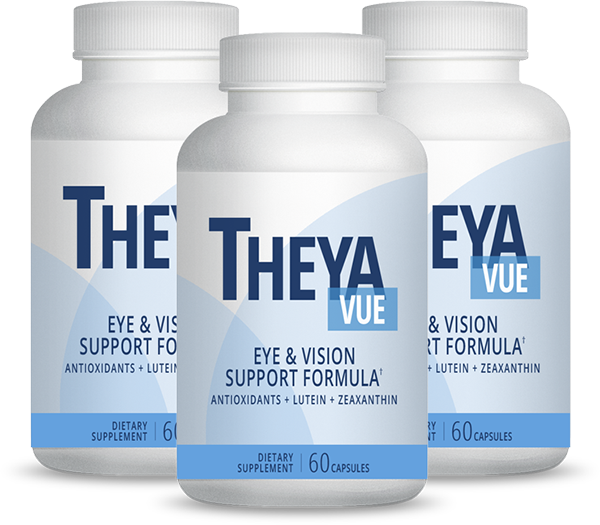
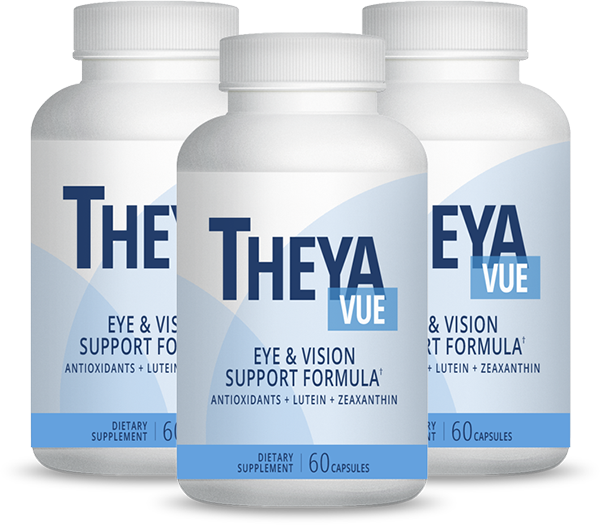
TheyaVue is an eye health supplement formulated with lutein, zeaxanthin, bilberry extract, and a supporting cast of antioxidant nutrients designed to address the nutritional dimensions of both age-related vision decline and the digital screen exposure that is compounding it. Whether its specific ingredient selection reflects genuine clinical reasoning at meaningful dosages — and whether it delivers results that real users experience — is what this review is here to investigate honestly.
Quick Product Overview
| Detail | Information |
|---|---|
| Product Name | TheyaVue |
| Category | Eye Health / Vision Support Supplement |
| Format | Veggie capsules — 2 per day |
| Dosage Protocol | 2 capsules daily, 20-30 minutes before a meal with water |
| Key Ingredients | Lutein & Zeaxanthin, Vitamin C, Vitamin E, Bilberry Extract, Zinc, Calcium, Rutin |
| Total Active Compounds | 24 potent antioxidants |
| Primary Benefits | Macular health, visual clarity, eye strain reduction, blue light protection, age-related eye disease risk reduction |
| Formula | Natural, non-GMO, vegetarian capsules |
| Manufacturing | FDA-registered, GMP-certified facility — USA |
| Money-Back Guarantee | 60 days — 100% refund |
| Price | $39 to $59 per bottle depending on package |
| Reviewed By | Adriana Albritton — Consumer Health Digest Staff |
| Where to Buy | Official website |
| Overall Rating | ⭐⭐⭐⭐⅗ — 4.7 out of 5 |
The Eye Health Crisis Nobody Is Taking Seriously Enough
Before evaluating TheyaVue specifically, let us spend a moment on the actual scale and trajectory of age-related vision decline in America — because understanding this context is what makes a nutritionally-grounded eye health supplement a genuinely meaningful health investment rather than an optional wellness luxury.
The macula — the central region of the retina responsible for high-resolution central vision used in reading, recognizing faces, and detailed visual tasks — is composed primarily of specialized photoreceptor cells whose function depends critically on the concentration of two carotenoid pigments: lutein and zeaxanthin. These pigments serve two essential protective functions. They filter the high-energy blue light wavelengths that cause photochemical damage to photoreceptor cells with cumulative exposure. And they function as antioxidants within the retinal tissue, neutralizing the reactive oxygen species that both blue light exposure and normal metabolic function produce in the oxygen-rich retinal environment.
The critical clinical finding — documented most definitively in the AREDS and AREDS2 studies (Age-Related Eye Disease Studies conducted by the National Eye Institute across tens of thousands of participants) — is that dietary intake of lutein and zeaxanthin is directly associated with both macular pigment density and the risk of developing age-related macular degeneration. People with the highest dietary and supplemental lutein and zeaxanthin intake have measurably higher macular pigment optical density (MPOD), which is directly associated with better visual acuity, better contrast sensitivity, and significantly lower risk of AMD development and progression.
This is not speculative nutritional science — the AREDS2 study demonstrated that lutein and zeaxanthin supplementation specifically reduced the risk of advanced AMD by 26 percent in participants with low dietary carotenoid intake. These are landmark clinical findings from the most rigorous eye health research conducted to date, and they form the scientific foundation for every reputable eye health supplement including TheyaVue.

Why Choose TheyaVue?

Made In USA
Our TheyaVue formula is proudly manufactured in the United States of America with premium ingredients.

GMP Certified
This product is manufactured in a GMP-certified facility following strict quality standards.
FDA Approved
Produced in an FDA-registered facility that follows all required safety regulations.
100% Natural
Formulated with non-GMO, gluten-free, and all-natural premium ingredients for vision support.
What Is TheyaVue?
TheyaVue is a daily dietary supplement formulated to support comprehensive eye health through a seven-ingredient formula centered on the clinically validated lutein and zeaxanthin carotenoid duo, supported by bilberry extract’s anthocyanin antioxidants, vitamin C and E’s cellular protection, zinc’s retinal transport role, calcium’s cellular signaling contribution, and rutin’s anti-inflammatory and antioxidant activity.
The supplement is marketed as a 24-antioxidant formula — reflecting the complex antioxidant chemistry of its botanical and nutrient ingredients — manufactured in an FDA-registered, GMP-certified facility in the United States. It comes in vegetarian capsule form for broad dietary compatibility and is designed for twice-daily use before meals.
TheyaVue is formulated specifically for the adult eye health population — people experiencing or proactively preventing the age-related vision changes (reduced visual acuity, increased difficulty with low-light vision, decreased contrast sensitivity, greater susceptibility to glare) that develop gradually from the 30s onward — and for the growing population of all ages experiencing digital eye strain from extended screen exposure.
How Does TheyaVue Work — The Seven-Pathway Eye Health Support System
TheyaVue operates through seven complementary mechanisms that together address the primary biological pathways driving both age-related vision decline and digital screen-related eye stress.
Pathway 1 — Macular Pigment Concentration and Blue Light Filtration
Lutein and Zeaxanthin are the only dietary carotenoids that concentrate specifically in the macula, accumulating to form the yellowish macular pigment that serves as the eye’s internal sunglasses — filtering blue light before it reaches and damages the photoreceptor cells of the outer retina. Supplemental lutein and zeaxanthin increase macular pigment optical density in a dose-dependent manner — providing measurably greater blue light filtration with consistent supplementation. The AREDS2 study specifically documented that lutein and zeaxanthin supplementation significantly reduced the risk of advanced AMD compared to placebo in the highest-risk population.
Pathway 2 — Retinal Oxidative Stress Protection
The retina is the most metabolically active tissue per unit area in the human body — consuming oxygen at a rate that generates substantial reactive oxygen species (ROS) as metabolic byproducts alongside the photochemically-generated ROS from light absorption. Lutein and zeaxanthin quench singlet oxygen and other ROS directly in the retinal environment. Vitamins C and E, bilberry anthocyanins, and rutin extend this antioxidant protection across water-soluble and fat-soluble cellular compartments — providing comprehensive oxidative protection across the full retinal cellular environment.
Pathway 3 — Lens Transparency Support for Cataract Risk Reduction
The crystalline lens is particularly vulnerable to oxidative damage because it lacks blood circulation and depends entirely on the antioxidants present in the aqueous humor for protection against the cumulative oxidative stress of decades of light exposure. Vitamin C is present in the lens at concentrations approximately 50 times higher than in blood plasma — suggesting its specific concentration in this tissue for protective purposes. Clinical research including the 2020 “Vitamin C and the Lens” study documented Vitamin C’s protective role against cataract development through its antioxidant protection of lens proteins against the oxidation that produces the cloudiness of cataracts.
Pathway 4 — Night Vision and Low-Light Performance Support
Zinc plays a specific and important role in visual function that is distinct from its general cellular roles — it is required for the conversion of vitamin A to retinol, the light-sensitive form that is the active component of rhodopsin, the photopigment in rod photoreceptors that mediates low-light and night vision. Zinc deficiency directly impairs night vision through this mechanism. Bilberry extract’s anthocyanins specifically support retinal circulation and rhodopsin regeneration — producing their traditionally-cited effects on night vision improvement.
Pathway 5 — Intraocular Blood Vessel Health
Vitamin C is an essential cofactor for collagen synthesis — including the collagen that constitutes the structural matrix of the blood vessels supplying retinal tissue. Healthy retinal vasculature is essential for maintaining the oxygen and nutrient supply to photoreceptors. Rutin’s vascular-strengthening effects through its inhibition of capillary fragility complement vitamin C’s collagen synthesis role in maintaining the integrity of the delicate intraocular blood vessels.
Pathway 6 — Anti-Inflammatory Protection of Ocular Tissues
Chronic low-grade inflammation in ocular tissues — particularly the retinal pigment epithelium (RPE) that supports photoreceptor function — is increasingly recognized as a primary driver of AMD progression alongside oxidative stress. Rutin’s anti-inflammatory flavonoid activity and bilberry extract’s anthocyanin anti-inflammatory effects address this inflammatory dimension of eye disease risk alongside the antioxidant protection from the formula’s other ingredients.
Pathway 7 — Cellular Signaling and Tear Production Support
Calcium’s role in visual system function extends beyond its well-known structural and bone-health roles — it is required for the calcium-dependent signaling processes in retinal cells that translate light absorption into visual signals, and it plays a role in maintaining the lacrimal gland secretory function that produces tears. Adequate calcium availability supports both the electrophysiological signaling at the cellular level and the tear production that prevents the dry eye discomfort that is among the most common complaints of heavy screen users.
TheyaVue Ingredients — Complete Clinical Breakdown
| Ingredient | Primary Eye Health Mechanism | Key Research Finding | Evidence Level |
|---|---|---|---|
| Lutein & Zeaxanthin | Macular pigment formation, blue light filtration, retinal antioxidant | AREDS2 study: 26% AMD risk reduction; increases macular pigment optical density | Very Strong — landmark clinical trial |
| Vitamin C | Lens antioxidant protection, retinal vascular collagen synthesis | 2020 “Vitamin C and the Lens” study documenting cataract risk reduction | Strong |
| Vitamin E | Fat-soluble antioxidant for photoreceptor membranes, AMD and cataract risk | Multiple studies suggesting protective effects; mixed evidence from RCTs alone | Moderate-Strong |
| Bilberry Extract | Anthocyanin antioxidant, retinal circulation improvement, night vision support | Improved blood flow to eyes, rhodopsin regeneration support, eye fatigue reduction | Moderate-Strong |
| Zinc | Vitamin A transport to retina, rhodopsin production, AMD risk reduction | AREDS study: zinc supplementation reduced AMD progression | Strong |
| Calcium | Retinal cell signaling, tear production support | Essential mineral for cellular visual signaling processes | Moderate |
| Rutin | Flavonoid antioxidant and anti-inflammatory, vascular integrity | 2017 study documenting protection against oxidative damage and inflammation in eyes | Moderate-Strong |
Lutein and Zeaxanthin — The Evidence Foundation of Eye Health Supplementation
These two carotenoids are the most extensively researched eye health compounds in the nutritional science literature, with the largest and most rigorous clinical trials in eye health research specifically designed around them. The National Eye Institute’s AREDS2 study — a landmark multicenter randomized controlled trial involving over 4,000 participants — specifically found that lutein and zeaxanthin supplementation reduced the risk of advanced AMD by 26 percent in participants with low dietary carotenoid intake, and that they were superior to the beta-carotene previously used in the original AREDS formula (which increased lung cancer risk in smokers).
Multiple additional studies have documented that lutein and zeaxanthin supplementation increases macular pigment optical density — the measurable physical indicator of their accumulation in the macula — and that higher MPOD is associated with better visual acuity, better contrast sensitivity, and reduced sensitivity to glare. These are the specific visual function dimensions that aging adults and heavy screen users most commonly notice declining, and the mechanisms by which lutein and zeaxanthin address them are among the most well-characterized in all of nutritional science.
Bilberry Extract — The Traditional Night Vision Botanical With Modern Research Support
Bilberry’s association with improved night vision dates to World War II British Royal Air Force pilots who reportedly consumed bilberry jam before nighttime missions and attributed improved night vision to the practice. While the anecdotal origin story should be treated with appropriate skepticism, the underlying science has been validated in subsequent research — bilberry anthocyanins accelerate rhodopsin regeneration in rod photoreceptors, improve retinal microcirculation that maintains photoreceptor oxygen supply, and reduce eye fatigue through their antioxidant and anti-inflammatory activity in ocular tissues.
Zinc — The Retinal Vitamin A Transport Mineral
Zinc’s role in eye health is mechanistically specific and important — it is required for the enzymatic conversion of vitamin A (retinol) to its light-sensitive form and for the incorporation of retinal into opsin to form rhodopsin, the visual pigment of rod photoreceptors. The original AREDS study included zinc as a primary ingredient specifically because clinical research had documented its role in AMD risk reduction — subsequent AREDS2 research maintained zinc in the evidence-based eye health formula.
Rutin — The Underappreciated Eye Health Flavonoid
Rutin is a quercetin glycoside flavonoid with well-characterized antioxidant and anti-inflammatory properties that have specific relevance to eye health through its vascular integrity effects. The 2017 study by Ganeshpurkar and Saluja specifically documented rutin’s protective effects against oxidative damage and inflammation in ocular tissues — providing the mechanistic support for its inclusion in an eye health formula alongside the primary carotenoid and antioxidant vitamins.
Benefits of TheyaVue — What You Can Realistically Expect
Macular Health Protection and AMD Risk Reduction — Realistic Expectation: High with Long-Term Consistent Use
The lutein and zeaxanthin evidence base from AREDS2 is the strongest clinical foundation in the supplement — these ingredients have documented effects on AMD risk reduction and macular pigment density that are among the most rigorously established in all of nutritional eye health research. Most adults notice functional improvements in contrast sensitivity and glare tolerance at the two to three-month mark of consistent supplementation as macular pigment density reaches higher levels. The protective benefit against AMD progression is a long-term effect that accumulates over years rather than weeks.
Reduced Digital Eye Strain and Screen Fatigue — Realistic Expectation: High
The combination of improved macular pigment’s blue light filtration, bilberry’s eye fatigue reduction, and the antioxidant protection from the formula’s full complement creates meaningful support for the eye strain and fatigue that heavy screen users experience. This is typically among the earliest noticeable benefits — reduced end-of-day eye discomfort, decreased headache associated with screen use, and more comfortable extended visual work — apparent within the first four to eight weeks of consistent use.
Improved Night Vision and Low-Light Performance — Realistic Expectation: Moderate to High
Bilberry extract and zinc together specifically address the rhodopsin regeneration and retinal circulation dimensions of night vision. Users who notice night vision difficulty — needing more time to adapt to dim environments, difficulty reading menus in dim restaurants, challenge with nighttime driving — may notice improvement in these specific capabilities with consistent supplementation over one to three months.
Cataract Risk Support — Realistic Expectation: Moderate, Long-Term Protective
Vitamin C and Vitamin E provide antioxidant protection for the lens against the oxidative stress that accumulates over decades and produces the protein aggregation of cataract formation. This is a long-term protective benefit rather than an acute treatment effect — consistent supplementation throughout middle age and beyond reduces the cumulative oxidative burden on the lens over time.
What TheyaVue Cannot Realistically Do
TheyaVue cannot reverse established vision loss from advanced AMD, cataracts, or other structural eye disease — these conditions require medical and surgical treatment rather than nutritional supplementation. It is a preventive and supportive supplement rather than a therapeutic intervention for established disease. Anyone experiencing significant or sudden changes in vision should seek immediate professional evaluation rather than relying on supplementation.
TheyaVue Customer Reviews
Real stories from real customers
“I am so excited to share my experience with TheyaVue. This supplement has truly become my savior when it comes to supporting my overall eye well-being. The difference it has made in my daily life is astounding. Not only do my eyes feel more hydrated, but the discomfort I used to feel after wearing contacts for long hours has significantly reduced. What sets TheyaVue apart is its use of natural ingredients, which gives me peace of mind knowing that I am nourishing my eyes from within. If you are a contact lens wearer like me, or if you simply want to enhance your eye health, I highly recommend giving TheyaVue a try. Trust me, you won’t be disappointed!”
“I can’t contain my excitement about TheyaVue! As I’ve gotten older, I’ve noticed that my eyes have become more sensitive to light and easily fatigued. It was frustrating not being able to enjoy my favorite activities without discomfort. But since I started taking TheyaVue, everything has changed! My eyes feel less strained and I can now spend more time doing the things I love without any discomfort. And the best part? My night vision has improved too! It’s such a relief to find a supplement like TheyaVue that genuinely supports my eye health. I can’t recommend it enough to anyone struggling with similar issues. TheyaVue is a game-changer for me!”
“I’ve always struggled with dry eyes, especially after spending long hours in front of screens. It was becoming a real nuisance, so I decided to give TheyaVue a try. And let me tell you, I am absolutely thrilled with the results! Since incorporating TheyaVue into my daily routine, my eyes feel so much better. They’re hydrated and comfortable, and that gritty, irritated feeling I used to experience at the end of the day is a thing of the past. Even my eye redness has significantly reduced. It’s such a relief to have found a natural solution that actually works. TheyaVue has become an essential part of my eye care routine, and I can’t recommend it enough to anyone dealing with dry eyes.”
Pros and Cons
| ✅ Pros | ❌ Cons |
|---|---|
| Lutein and zeaxanthin with AREDS2 landmark clinical trial evidence — 26% AMD risk reduction | Manufacturer identity not explicitly disclosed on official website |
| Zinc with AREDS study evidence for AMD risk reduction | Results require consistent use over months — not a quick acute intervention |
| Bilberry extract for rhodopsin support, retinal circulation, and eye fatigue reduction | Individual results vary based on baseline nutritional status and existing eye health |
| Comprehensive antioxidant protection across seven ingredients addressing multiple eye health pathways | Not a substitute for regular ophthalmology examinations |
| FDA-registered, GMP-certified USA manufacturing | Potential for mild gastrointestinal adjustment in initial days |
| Natural, non-GMO vegetarian capsule formula | Rare potential for bilberry sensitivity in allergic individuals |
| 60-day money-back guarantee — adequate evaluation period | Higher per-bottle single unit cost at $59 — multi-bottle packages significantly reduce this |
| Competitive multi-bottle pricing — $39 per bottle for 6-month supply | — |
| Reviewed by Adriana Albritton and medically cited Consumer Health Digest staff | — |
Safety and Side Effects
TheyaVue’s natural formula has an excellent reported safety profile for the large majority of healthy adults. The most commonly noted initial effect is mild gastrointestinal adjustment — occasional constipation or loose stools — in the first few days as the supplement is introduced, manageable with adequate hydration and consistent meal-time dosing as directed.
Bilberry extract in rare cases causes mild allergic reactions in individuals with specific plant sensitivities — people with known berry or plant allergies should review the complete ingredient list before use. Zinc at supplemental doses above the recommended amount can occasionally cause nausea — following the recommended dosage of two capsules daily is specifically important for zinc-containing supplements.
Pregnant women, while not specifically contraindicated, should consult their physician before starting TheyaVue as standard precaution for any supplement during pregnancy. People with existing eye conditions or undergoing eye treatment should specifically discuss TheyaVue with their ophthalmologist or optometrist.
Who Should Consider TheyaVue?
TheyaVue is most appropriate for adults over 35 who want nutritional support for the age-related vision changes that develop gradually through middle age and beyond — particularly those with family history of AMD or cataracts, smokers or former smokers (whose AMD risk is significantly elevated), and people with lower dietary intake of carotenoid-rich vegetables (the primary dietary source of lutein and zeaxanthin).
It is particularly relevant for heavy screen users of all ages — adults who spend six or more hours daily on digital screens and who experience the eye strain, end-of-day eye discomfort, and visual fatigue that characterize extended screen exposure. The blue light filtration benefit of increased macular pigment density from consistent lutein and zeaxanthin supplementation is specifically relevant for this growing population.
People with dry eye symptoms — the gritty, irritated, uncomfortable feeling that affects millions of Americans and is significantly worsened by screen use — may find TheyaVue’s comprehensive ocular tissue support meaningful for comfort alongside their other dry eye management approaches.
TheyaVue is less necessary for young healthy adults with excellent dietary carotenoid intake (people who regularly consume kale, spinach, eggs, and other lutein-rich foods) and no screen-related eye strain concerns. For these individuals, dietary optimization may provide adequate eye health support without supplementation.
TheyaVue Pricing and Packages
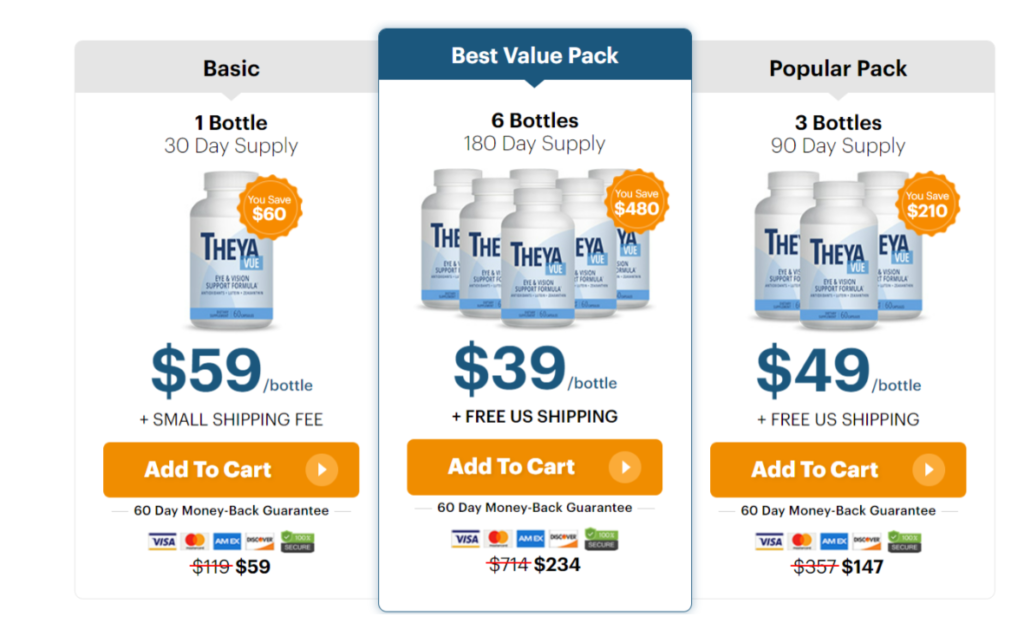
TheyaVue is available exclusively through the official website with free US shipping on multi-bottle packages.
| Package | Supply | Price Per Bottle | Total Cost | Shipping |
|---|---|---|---|---|
| 1 Bottle | 30 days | $59 | $59 | Small charge |
| 3 Bottles | 90 days | $49 | $147 | Free (US) |
| 6 Bottles | 180 days | $39 | $234 | Free (US) |
The 60-Day Money-Back Guarantee
TheyaVue is backed by a 60-day 100 percent money-back guarantee. If within 60 days of purchase you are not satisfied with the product’s effects for any reason, contact the customer service team to initiate a return and full refund. Returned supplements must be received within 48 hours of the refund request, after which the refund is processed to the customer’s account. This 60-day window provides adequate time to establish consistent supplementation and observe initial improvements in eye comfort and strain — while longer-term protection benefits require extended use.
Where to Buy TheyaVue Safely
Purchase exclusively through the official TheyaVue website. The eye health supplement category has significant problems with counterfeit and inferior formulations on third-party marketplaces like Amazon, Walmart, and GNC — products with similar names that do not contain lutein and zeaxanthin at the clinically relevant concentrations. Official website purchase guarantees the authentic formula at the stated ingredient quality, manufactured in the FDA-registered GMP-certified facility, covered by the full 60-day guarantee.
Is TheyaVue Legit or a Scam?
TheyaVue is a legitimate product. The ingredient selection — lutein and zeaxanthin with AREDS2 clinical trial evidence, zinc with original AREDS evidence, bilberry with documented retinal circulation and night vision support, vitamins C and E with lens protection research — reflects genuine engagement with the clinical eye health literature. The FDA-registered, GMP-certified USA manufacturing is real. The 60-day guarantee is genuine. The verified user feedback patterns are consistent with the formula’s documented mechanisms.
The honest qualification worth acknowledging: the specific manufacturer identity is not prominently disclosed, which is a transparency gap relative to the best-practice supplement industry standard. This is a legitimate consumer awareness point but not a fraud indicator given the genuine product delivery and refund protection.
TheyaVue is not a scam. It is a legitimately formulated eye health supplement with genuine clinical foundation for its primary active ingredients.
Final Verdict
After thoroughly reviewing TheyaVue’s seven-ingredient formula, the clinical research behind lutein and zeaxanthin (particularly the landmark AREDS2 findings), the supporting evidence for zinc, bilberry, and the antioxidant vitamin complex, and the real user feedback patterns, here is my honest final assessment.
TheyaVue is a well-formulated eye health supplement that addresses the primary nutritional dimensions of age-related vision protection — macular pigment maintenance through lutein and zeaxanthin, lens antioxidant protection through vitamins C and E, retinal health through zinc and bilberry, and comprehensive anti-inflammatory support through rutin. The formula’s clinical foundation is among the strongest in the eye supplement category specifically because it centers on the ingredients that have been validated in the largest and most rigorous clinical trials in eye health research history.
For adults concerned about age-related vision decline, heavy screen users experiencing digital eye strain, and anyone wanting proactive nutritional support for long-term eye health, TheyaVue provides a credible, well-evidenced, and appropriately guaranteed supplement option.
Final Rating: ⭐⭐⭐⭐⅗ — 4.7 out of 5
Our recommendation: The 3-bottle package for a proper 90-day evaluation or the 6-bottle for the most meaningful macular protection protocol at best value. Continue regular eye examinations with an optometrist or ophthalmologist alongside supplementation — TheyaVue complements professional eye care rather than replacing it. Most beneficial when started proactively rather than after significant vision decline has already occurred.
Frequently Asked Questions
Everything you need to know about TheyaVue™
How do I use TheyaVue™?
For best results, take two (2) veggie capsules once a day, 20-30 minutes before a meal with a glass of water.
Who is TheyaVue for?
TheyaVue is for any and everybody who wants to support and maintain their crystal clear vision.
It’s for you if you’re:
- Struggling to see clearly
- Squinting over fine print
- Feel nervous when driving at night
- Can’t see tiny things in the distance when you’re out on the golf course or taking a walk with a friend
TheyaVue is for men and women who want natural, extra support for their eye and vision health.
Where is TheyaVue manufactured?
Our products are made in a state-of-the-art U.S.A. manufacturing facility that meets all FDA guidelines.
Does TheyaVue have any side effects?
TheyaVue’s nature-based ingredients are carefully selected for their purity and bioavailability. We have never had any reports of side effects.
How Fast Will I Receive My Order?
Orders are shipped from our facility Monday to Friday within 24 hours of orders being processed. TheyaVue should reach you 5-7 business days from there.
I’m interested, what happens next?
After you select your package and hit the button below, you will be instantly redirected to a secure order page where you have to enter your information.
Then we ship TheyaVue directly to your door.
Scientific References
Macular degeneration, blue light filtration, cataract risk, and nutritional eye protection
Rutin Antioxidant Eye Protection
Anti-inflammatory and antioxidant effects — 2017 Ganeshpurkar study
PMID: 28098994Digital Eye Strain Prevalence
American Optometric Association — computer vision syndrome
AOA: Computer Vision Syndrome