Quick Product Overview
| Feature | Details |
|---|---|
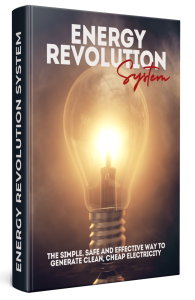
| Product Name | The Ultimate Energizer Guide |
| Product Type | Digital PDF Guide / DIY Energy Generator Blueprint |
| Main Purpose | Build a home energy generator to reduce electricity bills |
| Technology | Electromagnetic induction — rotor, stator, and neodymium magnets |
| Format | Digital PDF guide (downloadable) |
| Amazon Rating | 3.0/5 from 94 global ratings |
| Money-Back Guarantee | 60 Days |
| Official Website | Ultimate Energizer Guide |
Introduction: Why Energy Independence Has Become a Priority for American Households
Electricity costs have become one of the fastest-growing household expenses in America. The U.S. Energy Information Administration reports that residential electricity prices have increased dramatically over the past decade — and projections suggest the trend will continue as aging grid infrastructure, increasing demand, and the transition to cleaner energy sources all drive costs higher.
For the average American household spending $115-150 per month on electricity — and far more in states with high energy costs — the financial burden is real and growing. Add to this the frustration of grid vulnerability (power outages are increasing in frequency and duration), growing environmental consciousness about fossil fuel dependence, and the appeal of genuine energy self-sufficiency, and the appeal of alternative home energy solutions becomes clear.
This context has driven explosive interest in DIY energy generation — solar panels, wind turbines, and increasingly, compact electromagnetic generators that promise to produce meaningful electricity from mechanical motion without fuel costs.
The Ultimate Energizer Guide sits squarely in this space — a digital PDF guide by creator Michael (building on the alleged discovery of inventor Arthur H. Matthews’ notebook by Steven Perkins and his friend James) that claims to provide a complete, step-by-step blueprint for building your own home energy generator using readily available materials.
With claims of dramatically reduced electricity bills, energy independence, and eco-friendly power generation, The Ultimate Energizer has generated significant interest — but also skepticism. Does it actually work? Is the underlying science legitimate? What do real users say?
In this comprehensive, honest review, we examine every dimension of The Ultimate Energizer Guide — the claimed technology, how the device is built, real customer experiences, safety considerations, and whether this guide represents a genuine path to energy savings.

What Is The Ultimate Energizer Guide?
The Ultimate Energizer Guide is a comprehensive digital PDF guide that provides step-by-step instructions for building a home-based electromagnetic energy generator using a rotor-stator configuration with neodymium magnets.
The guide was created by someone identified as Michael, drawing on the purported discovery of inventor Arthur H. Matthews’ engineering notebook — a document allegedly containing blueprints for an innovative energy generation device that remained obscure for decades.
The guide is designed to be accessible to ordinary homeowners — not just engineers or technical professionals. Its instructions are written to enable anyone with basic DIY skills and the ability to source relatively standard components from hardware stores or online suppliers to construct their own energy generator.
The completed device is intended to generate electricity through electromagnetic induction — the same fundamental physics principle that underlies conventional electrical generators — in a compact format suitable for home use, RV applications, cabins, and off-grid living.
Key characteristics:
- Digital PDF format — immediate download after purchase
- Complete materials list with sourcing guidance
- Step-by-step assembly instructions
- Safety and maintenance guidelines
- Bonus resources including energy-saving tips and maintenance guide
- 60-day money-back guarantee
The Origin Story: Arthur H. Matthews and the Forgotten Notebook
The narrative behind The Ultimate Energizer Guide involves a fascinating historical backstory. According to the guide’s creator, the story begins when Steven Perkins discovered an old engineering notebook among the belongings of a previous homeowner near Quebec City.
The notebook allegedly belonged to Arthur H. Matthews — described as an engineer born in England who was reportedly the son of a laboratory assistant to renowned physicist Lord Kelvin. Through this connection, Matthews allegedly developed a relationship with a famous inventor then advocating for Alternating Current over Direct Current — a figure whose identity the guide implies without naming directly.
Matthews reportedly worked alongside this inventor until 1943 and recorded his engineering insights in the notebook that Steven later discovered. When Steven and his friend James examined the notebook together, they recognized a blueprint for an innovative energy generation device — and proceeded to translate Matthews’ complex diagrams into the practical, step-by-step guide that became The Ultimate Energizer.
Important note for consumers: This origin narrative adds compelling storytelling to the guide but cannot be independently verified. The scientific principles the device claims to use — electromagnetic induction as described by Faraday’s Law — are real and well-established. The historical backstory should be appreciated as part of the product’s marketing narrative rather than treated as historically verified fact.
How Does The Ultimate Energizer Device Work?
The Ultimate Energizer claims to generate electricity through electromagnetic induction — a genuine, well-established scientific principle first documented by Michael Faraday in the 19th century and the foundation of virtually every electrical generator in the world.
The Scientific Principle
Faraday’s Law of Electromagnetic Induction states that when a magnetic field changes within a coil of wire, an electromotive force (voltage) is induced in the coil, producing an electrical current. This is not theoretical — it is the fundamental mechanism by which power plants generate the electricity that runs the modern world.
A moving magnet through a coil of wire produces electricity. Scale this up with multiple coils, stronger magnets, and a mechanically rotating system, and you have a generator.
The Device Configuration
The Ultimate Energizer Guide instructs users to build a device featuring:
Rotor: The rotating component containing powerful neodymium magnets — permanent magnets among the strongest available commercially, generating intense magnetic fields.
Stator: The stationary component containing coils of wire positioned to intersect with the rotating magnetic field.
Operation: When the rotor spins within the magnetic field created by the stator configuration, it induces electrical current in the stator coils — producing a consistent flow of electricity.
Energy Storage: The system includes a battery for storing generated electricity, enabling use during periods of low or no generation.
Important Scientific Caveat
While electromagnetic induction is entirely real physics, there is an important consideration that any honest review must address: a device based purely on electromagnetic induction requires an energy input to drive the rotor’s rotation. Energy cannot be created from nothing — this is the Law of Conservation of Energy.
The guide suggests the device taps into “energy from around us” and produces energy without fossil fuels. In practice, any electromagnetic generator requires mechanical input — whether from wind, water, hand cranking, or another source. Consumers should approach claims of producing significant electricity without meaningful energy input with appropriate scientific skepticism.
The guide is most accurately understood as a blueprint for building a compact electromagnetic generator — a real and functional device — rather than a “free energy” machine that produces electricity from nothing.
Key Features of The Ultimate Energizer Guide
Complete DIY Blueprint The guide provides a comprehensive materials list, step-by-step assembly instructions, and diagrams enabling users with basic DIY skills to construct the device without professional electrical engineering knowledge.
Accessible Component List Materials are described as available from local hardware stores or online suppliers — avoiding the need for specialized or hard-to-source components that would make the project impractical for most users.
Energy Storage Integration The system design includes battery storage — allowing generated electricity to be accumulated and used when needed rather than only during active generation.
Portability and Versatility The device’s compact design makes it potentially useful for home use, RV applications, remote cabins, and off-grid living situations.
Bonus Resources The guide includes additional materials: energy-saving tips for reducing overall electricity consumption, a maintenance guide for keeping the device operating efficiently, and customer support access.
Eco-Friendly Claims The device is described as producing no direct emissions, requiring no fossil fuels, and operating silently — representing a genuinely cleaner energy source than grid electricity powered by coal or natural gas.
Building The Ultimate Energizer: What’s Required
Materials Checklist
The guide requires the following general categories of components:
Generator Components: Rotor, stator, and neodymium magnets — the core electromagnetic components of the device.
Electrical Components: High-quality wiring for efficient electricity flow, battery for energy storage, multimeter for measuring electrical output, and battery charger for battery maintenance.
Tools: Basic DIY tools including screwdrivers, pliers, and related hardware tools.
Safety Equipment: Gloves and safety glasses for protection during construction.
Supporting Structure: Mounting or housing for the assembled device as needed for the specific installation.
Step-by-Step Assembly Overview
Step 1 — Workspace Preparation: Select a well-ventilated location free from moisture for both construction and eventual installation.
Step 2 — Component Assembly: Follow the guide’s detailed instructions to assemble the generator components — rotor, stator, and magnets — ensuring proper alignment and fit.
Step 3 — Wiring Connection: Connect all wiring per the guide’s specifications, ensuring secure and efficient electrical connections throughout the system.
Step 4 — Battery Installation: Connect the battery system for energy storage and management.
Step 5 — Safety Verification: Perform thorough safety checks to confirm all connections are secure and no exposed wiring exists.
Step 6 — Testing and Calibration: Activate the device and use the multimeter to monitor output. Make adjustments as directed by the guide to optimize performance.
Technical Skill Requirements
The guide describes itself as accessible to users without engineering backgrounds. However, honest assessment suggests the following baseline skills are beneficial:
- Basic comfort with hand tools and DIY projects
- Ability to follow detailed technical diagrams
- Understanding of basic electrical safety principles
- Patience for careful, step-by-step assembly work
Those with no prior DIY experience may find the project more challenging than the guide suggests.
Comparative Analysis: The Ultimate Energizer vs. Traditional Energy Sources
| Criteria | The Ultimate Energizer | Traditional Grid Energy |
|---|---|---|
| Environmental Impact | No direct emissions during operation | Dependent on energy mix — coal/gas produces significant emissions |
| Safety | Silent operation, no combustion | Grid power carries standard household electrical risks |
| Maintenance | Described as low maintenance | No maintenance for consumers but grid vulnerability exists |
| Reliability | Dependent on mechanical input availability | Generally reliable but vulnerable to outages |
| Cost Savings | Potential savings with effective implementation | High and increasing ongoing energy costs |
| Installation | DIY — no permits typically required | Professional installation for significant upgrades |
| Energy Independence | Potential for reduced grid dependency | Complete grid dependence |
Real Customer Reviews: What Are People Saying?
The Ultimate Energizer Guide has an Amazon rating of 3.0 out of 5 stars from 94 global ratings — a more mixed picture than the promotional material suggests and important context for any balanced assessment.
Here are verified user experiences:
Owen David — Verified User ⭐⭐⭐⭐ “As soon as you create this system, you will also be equipped with the ability to produce 75% of more energy for the appliances at home day and night. This helps me power up any remote cabin in the woods, and I can also build and maintain it with the proper instructions.”
Gabriel Ethanjohn — Verified User ⭐⭐⭐⭐ “With the knowledge I acquire from this guide, I can power any of the household appliances I want — AC units, toasters, lamps. I get to do this anytime, anywhere legally, and wouldn’t need to worry about breaking the law.”
Honest Assessment of Customer Feedback
The 3.0/5 Amazon rating from 94 global reviews — significantly lower than the promotional rating — is important context. It suggests a meaningful proportion of purchasers did not find the guide as effective or straightforward as marketed.
Common positive feedback highlights:
- Value for off-grid and remote location applications
- Educational content about electromagnetic principles
- Satisfaction from the DIY building experience itself
Common criticisms in lower-rated reviews tend to center on:
- Expectations of dramatic electricity bill reductions not being realized at the claimed levels
- The complexity of building exceeding beginners’ expectations
- Uncertainty about the actual power output of the completed device
This mixed feedback pattern is important context for setting realistic expectations before purchasing.
Pros and Cons
| Pros | Cons |
|---|---|
| Based on genuine electromagnetic induction science | Amazon rating of 3.0/5 from 94 reviews suggests mixed real-world results |
| Potentially useful for off-grid and remote applications | Claims of 90% electricity bill reduction are not universally substantiated |
| Eco-friendly operation — no direct emissions or fossil fuel use | Requires mechanical energy input — not truly “free energy” |
| DIY approach with accessible materials | Requires basic technical skills — not as easy as marketed for complete beginners |
| 60-day money-back guarantee | Digital-only format — no physical copy available |
| Low maintenance once operational | Performance for high-energy appliances may be limited |
| Portable and versatile for multiple applications | Material availability and costs vary by location |
| Bonus resources included | Origin story cannot be independently verified |
Safety and Maintenance Guidelines
Safety Protocols
Ventilation: Install the device in a well-ventilated location to prevent overheating and ensure proper air circulation around electrical components.
Regular Inspections: Periodically check for loose connections, worn components, or signs of wear or damage. Address any issues promptly before they escalate.
Load Management: Do not exceed the device’s recommended power output capacity. The guide specifies load limits — stay within them to prevent overheating or component damage.
Moisture Protection: Keep all electrical components completely dry. Water and electricity are dangerous together, and moisture damage can render the device non-functional and create safety hazards.
Emergency Procedures: Familiarize yourself with the device’s emergency shut-off procedure before beginning operation.
Maintenance Schedule
Cleaning: Regularly wipe down the device’s exterior to prevent dust accumulation that can impair heat dissipation.
Connection Checks: Periodically inspect and tighten all electrical connections — loose connections can reduce efficiency and create safety risks.
Battery Maintenance: Follow manufacturer-recommended battery maintenance and replacement schedules to maintain energy storage capacity.
Performance Monitoring: Use the multimeter periodically to confirm the device is producing electricity at expected output levels.
Environmental Benefits
The Ultimate Energizer is genuinely eco-friendly in operation — once built, the device requires no fossil fuels, produces no direct emissions, and operates silently. For users seeking to reduce their personal carbon footprint and move toward greater energy independence, this represents a meaningful environmental benefit.
The device’s renewable-energy-adjacent nature — using mechanical energy to generate electricity without combustion — is consistent with broader trends toward distributed clean energy generation that do not require massive infrastructure investment.
Pricing and Purchase Information
The Ultimate Energizer Guide is a digital product available through the official website. As a PDF guide, it is immediately downloadable after purchase.
The guide is available at a single purchase price — there are no subscription fees or ongoing costs beyond the initial purchase. The primary ongoing expense is the cost of materials to build the device, which will vary based on component prices in your location and whether you source materials locally or online.
Money-Back Guarantee: The guide includes a 60-day money-back guarantee. If you are not satisfied with the guide’s content or your results within 60 days of purchase, you can request a full refund.
Is The Ultimate Energizer Guide Legit or a Scam?
This question requires a nuanced answer that honestly addresses both what the guide genuinely offers and where claims may exceed realistic outcomes.
Evidence supporting The Ultimate Energizer Guide’s legitimacy:
- The underlying electromagnetic induction technology is real, well-established physics — not pseudoscience
- The guide provides genuine step-by-step instructions for building a real device
- The 60-day money-back guarantee provides consumer protection
- Positive user reviews describe successful construction and genuine utility for off-grid and remote applications
- The device concept is consistent with real electromagnetic generator principles
Important concerns that consumers should consider:
- The Amazon rating of 3.0/5 from 94 verified global reviewers is significantly more mixed than the promotional materials suggest — indicating a meaningful proportion of purchasers had disappointing experiences
- Claims of 90% electricity bill reduction are extraordinary and not consistently validated by independent user reviews
- The “free energy” framing around the device is scientifically problematic — electromagnetic induction requires mechanical energy input, and energy cannot be created from nothing
- The historical backstory (Arthur H. Matthews’ notebook) cannot be independently verified
- Some claims about the device’s output capacity may exceed what the physics of a small compact generator can realistically deliver
Bottom line: The Ultimate Energizer Guide is a real digital product containing genuine information about building an electromagnetic generator. It is not a complete fabrication. However, consumers should approach the most dramatic claims — particularly around the scale of electricity bill reduction — with appropriate scientific skepticism. The guide is most likely to deliver value for users with off-grid, remote, or supplemental power applications rather than for those seeking to eliminate a significant portion of their home electricity bill from the main grid.
Who Should Consider The Ultimate Energizer Guide?
Most likely to benefit:
- Off-grid or remote living enthusiasts wanting supplemental power solutions
- RV and boat owners seeking portable electricity generation
- People in areas with frequent power outages wanting backup power capability
- DIY and maker enthusiasts interested in electromagnetic generator construction
- Those wanting to reduce fossil fuel dependence for smaller power needs
- Anyone genuinely curious about electromagnetic energy generation principles
Should approach with realistic expectations:
- Homeowners expecting dramatic reduction in their primary household electricity bills
- People without any prior DIY or technical skill experience
- Those expecting a plug-and-play solution rather than a hands-on building project
- Anyone expecting performance sufficient to power high-energy appliances like HVAC systems, electric dryers, or electric water heaters
Final Verdict
After thoroughly examining The Ultimate Energizer Guide’s claimed technology, the real physics underlying its mechanism, customer feedback from multiple platforms, safety considerations, and the broader context of DIY home energy generation, here is our honest final assessment:
The Ultimate Energizer Guide is a real digital product containing genuine information about building an electromagnetic generator based on legitimate physics principles. It offers real value for specific applications — particularly off-grid, remote, backup power, and supplemental energy generation — and provides an educational DIY experience in home energy technology.
However, the most ambitious claims — dramatically reducing home electricity bills by 90%, powering high-energy household appliances, and eliminating dependence on the grid — should be approached with significant skepticism. The mixed 3.0/5 Amazon rating from real verified buyers reflects a reality where many users found their experience did not match the promotional promises.
The 60-day money-back guarantee makes the initial purchase relatively low-risk. Users who approach the guide with realistic expectations — as a supplemental energy solution, a DIY learning experience, or a useful tool for specific off-grid applications — are most likely to find genuine value. Those expecting a simple solution to dramatically reduce a standard home’s electricity consumption from the main grid should research more carefully before purchasing.
Our Rating: 3.5 / 5.0
Frequently Asked Questions
Q1: What is The Ultimate Energizer Guide?
The Ultimate Energizer Guide is a comprehensive digital PDF guide providing step-by-step instructions for building a home-based electromagnetic energy generator using a rotor-stator configuration with neodymium magnets. It is based on Faraday’s principle of electromagnetic induction.
Q2: How does The Ultimate Energizer device work?
The device uses a rotor containing neodymium magnets that spins within a stator containing coils of wire. The movement of the magnetic field through the coils induces an electrical current — the same electromagnetic induction principle that underlies conventional electrical generators.
Q3: Is The Ultimate Energizer cost-effective?
The guide itself is a relatively low-cost digital purchase. The actual cost-effectiveness of the built device depends on component costs (which vary by location), the power output achieved, and how the electricity generated is used. Off-grid and backup power applications offer the clearest cost benefits.
Q4: Can anyone build The Ultimate Energizer device?
The guide is written for accessibility, but building the device realistically requires basic DIY skills, comfort with following technical diagrams, and patience for careful assembly. Complete beginners to DIY projects may find it more challenging than the marketing suggests.
Q5: What are the potential benefits of building The Ultimate Energizer?
Potential benefits include supplemental electricity generation, backup power during outages, off-grid power capability, educational value in electromagnetic generator technology, and reduced dependence on grid power for appropriate applications.
Q6: Is The Ultimate Energizer a legitimate product?
The guide contains real information about building a real electromagnetic generator based on legitimate physics. It is not a complete fabrication. However, the most dramatic claims about electricity bill reduction should be assessed with scientific scrutiny, and the 3.0/5 Amazon rating from verified buyers reflects mixed real-world outcomes.
Q7: Can The Ultimate Energizer really reduce electricity bills by 90%?
This claim is not consistently validated by independent user reviews and should be approached with significant skepticism. The physics of a compact home-built generator make dramatic reductions in primary household electricity bills unlikely for most users. The device is more realistically useful for supplemental and off-grid applications.
Q8: What are the potential risks of building The Ultimate Energizer?
As with any DIY electrical project, construction requires careful attention to the instructions and appropriate safety measures. Following all safety guidelines in the guide — including proper ventilation, moisture protection, and load management — minimizes risks.
Q9: Is there a money-back guarantee?
Yes. The Ultimate Energizer Guide comes with a 60-day money-back guarantee. If not satisfied with the guide for any reason within 60 days of purchase, you can request a full refund.
Q10: Are there alternative products similar to The Ultimate Energizer?
Yes — the DIY energy generation space includes various guides and approaches covering solar panel installation, wind turbine construction, and other electromagnetic generator designs. Comparing multiple options and their user reviews is advisable before committing to any specific guide.
Scientific References
Faraday’s Law of Electromagnetic Induction — foundational physics https://www.britannica.com/science/Faraday-law-of-induction
Law of Conservation of Energy — physical constraints on energy generation https://www.energy.gov/science-innovation/science-101/laws-thermodynamics
Neodymium magnets in electromagnetic generator applications https://www.sciencedirect.com/topics/engineering/neodymium-magnet
Electromagnetic induction and generator design — MIT OpenCourseWare https://ocw.mit.edu/courses/physics/
Residential electricity price trends — U.S. Energy Information Administration https://www.eia.gov/electricity/monthly/
DIY home energy generation — feasibility and practical considerations https://www.energy.gov/energysaver/electricity-generation
Off-grid power systems and electromagnetic generators https://www.nrcan.gc.ca/energy/efficiency/homes/20552
Battery storage for home energy systems https://www.energy.gov/eere/solar/solar-energy-storage
Home energy independence and grid alternatives https://www.energy.gov/energysaver/planning-home-renewable-energy-system
Distributed energy generation and environmental benefits https://www.epa.gov/statelocalenergy/local-renewable-energy-benefits-and-resources