Quick Product Overview
| Feature | Details |
|---|---|
| Product Name | Urban Survival Code Crisis Preparedness and Survival Training Program |
| Product Type | Digital Survival Training Program — Modules, Bonus Guides, and Supplementary Resources |
| Format | Instant Digital Access — Core Modules + Bonus Guides + Community Support |
| Main Purpose | Teach Urban Crisis Preparedness, Emergency Response, Resource Management, Self-Defense, Medical Response, and Psychological Resilience for Surviving Natural Disasters, Civil Unrest, and Urban Emergencies |
| Key Modules | Module 1: Urban Threat Assessment — Module 2: Resource Acquisition — Module 3: Defense Protocols — Plus Supplementary Bonus Guides |
| Skills Covered | Crisis preparation, 72-hour emergency planning, water procurement and purification, food storage and rationing, self-defense, home security, emergency medical response, communication networks, psychological resilience, family emergency management |
| Who It’s For | Urban dwellers, suburban families, family preparedness coordinators, beginners through experienced preppers, anyone concerned about emergency readiness |
| Money-Back Guarantee | Satisfaction Money-Back Guarantee — Check Official Website for Terms |
| Creator | Experienced survival and emergency response professionals |
| Rating | 4.7/5 stars |
| Price | Multiple package options — Check Official Website for Current Pricing |
| Official Website | Official Website |
Introduction: The Crisis You Did Not Prepare For Is the One That Defines Everything
Most people think about emergency preparedness the way they think about estate planning — they know they should do it, they intend to do it, they periodically feel a mild urgency about it after reading a news story or experiencing a minor disruption, and then the urgency fades as ordinary life reasserts its immediate demands and the preparation gets deferred to a more convenient time that never quite arrives. And then the emergency happens. And the preparedness that was always going to be addressed next month becomes the single most consequential gap in their life, measured in stress, vulnerability, poor decisions made under pressure with inadequate resources, and the specific helplessness of a person who understood the risk intellectually but never translated that understanding into action.
The statistical reality of urban emergency exposure is sobering. According to FEMA, approximately 60 percent of Americans live in areas at significant risk from natural disasters — earthquakes, hurricanes, tornadoes, floods, wildfires — whose infrastructure disruption consequences (power outages, water system failures, transportation shutdowns, supply chain interruption) can render urban environments that normally function as highly reliable delivery systems for food, water, medical care, and personal safety into environments where none of those systems are reliably available. The 72 hours following a major urban emergency are statistically the highest-risk period — the window during which most preventable deaths, injuries, and harm occur — and the period during which prior preparation most dramatically separates those who navigate the crisis effectively from those who are overwhelmed by it.
Beyond natural disasters, the range of urban emergency scenarios that preparedness training addresses has expanded meaningfully in the current decade. Extended power grid failures from infrastructure vulnerability and extreme weather events, civil unrest and urban security disruptions, pandemic-level supply chain stress, and the more diffuse but equally real vulnerabilities of urban dependency on just-in-time food and water supply systems whose disruption even at moderate scale quickly exceeds the three-day emergency supply that most urban households maintain — all of these scenarios share a common characteristic: their impact on unprepared individuals and families is dramatically worse than their impact on those who have systematically invested in the knowledge, skills, and resources that the Urban Survival Code is designed to provide.
The Urban Survival Code is a comprehensive digital survival training program developed by emergency response and urban survival professionals that teaches the full spectrum of skills, strategies, and mindsets that effective crisis preparedness requires — from urban threat assessment and resource acquisition through self-defense protocols, emergency medical response, communication network building, and the psychological resilience training that crisis survival ultimately depends on. Unlike wilderness survival programs whose skills are largely irrelevant to the concrete, commercial, and infrastructure-dependent environments that most people actually inhabit during emergencies, the Urban Survival Code is specifically designed for the urban and suburban context — the city apartment, the suburban neighborhood, the commercial district disrupted by disaster — where the relevant survival skills are fundamentally different from those that remote wilderness contexts require.


What Is the Urban Survival Code?
The Urban Survival Code is a comprehensive digital crisis preparedness and survival training program developed by professionals with backgrounds in survival techniques, emergency response, and urban safety — designed to teach the full practical skill set that surviving urban emergencies effectively requires, organized into a structured learning progression that works for users at all experience levels from complete beginners to seasoned preppers seeking to systematize and extend their existing preparation.
The program’s core insight is that urban survival is a distinct discipline from wilderness survival — that the specific challenges of surviving in city and suburban environments during crises are fundamentally different in character, and require specifically different knowledge, techniques, and strategies than the wilderness survival content that dominates most mainstream preparedness literature and training. Urban survivors face challenges that wilderness survivalists typically do not: navigating the dense infrastructure of damaged cities, managing security in high-population environments where resource scarcity can accelerate social disruption, accessing water and food from urban sources rather than natural ones, maintaining community coordination in densely populated environments, and operating in the complex legal and social environment that post-crisis urban areas produce. The Urban Survival Code addresses each of these specifically urban challenges through content developed by practitioners whose experience is specifically in the urban emergency context rather than the wilderness context.
The program delivers its training through three core modules covering urban threat assessment, resource acquisition, and defense protocols, supplemented by bonus guides on advanced topics including first aid and alternative communication, and supported by community access that connects users with other preparedness-focused individuals for ongoing learning and mutual support.
Who Created the Urban Survival Code?
The Urban Survival Code was developed by a team of professionals with substantial hands-on experience in survival training, emergency response, and urban safety — practitioners whose knowledge reflects the accumulated lessons of real crisis situations rather than theoretical preparedness planning disconnected from the realities of how emergencies actually unfold in urban environments.
The development philosophy reflected in the program’s content reflects a practitioner’s perspective: a belief that preparedness training is most valuable when it addresses the specific scenarios that urban populations actually face, when it is organized around actionable skills rather than general knowledge, and when it is accessible and implementable by ordinary people without professional emergency response backgrounds. The program’s emphasis on 72-hour emergency planning as a critical initial focus, on practical resource management techniques that work in real urban environments, and on the psychological preparation dimension that purely tactical preparedness programs often neglect reflects the hard-won understanding that actual crisis survivors develop — the understanding that the gap between preparedness and unpreparedness most often manifests not in equipment but in knowledge, decision-making capacity under pressure, and the pre-established habits and plans that allow effective action before shock and uncertainty paralyze it.

The satisfaction money-back guarantee the program carries reflects the creators’ confidence that users who engage seriously with the Urban Survival Code’s content and implement its strategies will develop the tangible preparedness improvements in their crisis readiness, emergency plans, resource management, and family coordination that the program promises — and provides the financial protection that a fair evaluation of a comprehensive training program requires.
Why Urban Preparedness Matters More Now Than Ever
To understand why the Urban Survival Code’s specific focus on urban crisis preparedness is timely, practically relevant, and increasingly important for the average American household, it is worth examining the specific risk landscape that urban and suburban populations face in the current decade — and the specific preparedness gaps that the conventional understanding of emergency preparation leaves unaddressed.
The Infrastructure Dependency Problem
Modern urban life is built on a network of infrastructure systems — electrical grid, water treatment and distribution, transportation, communication, and supply chain logistics — that function with extraordinary reliability under normal conditions and that most urban residents have never experienced failing for more than a few hours at a time. This reliability has produced a dependency whose full consequences become apparent only when the systems fail: a city without electrical power for 72 hours is not merely inconvenient but genuinely dangerous for the significant fraction of the population dependent on powered medical devices, refrigerated medications, electric heating or cooling in extreme weather, and the electronic communication systems that coordinate emergency response. A water treatment or distribution failure affects the most fundamental of survival requirements within hours. A transportation disruption that blocks supply chain replenishment empties grocery stores whose just-in-time inventory model maintains three to five days of stock under normal turnover rates.
The Urban Survival Code’s resource acquisition module specifically addresses this infrastructure dependency by teaching the alternative acquisition strategies — water sourcing and purification from urban infrastructure remnants, food storage and rationing approaches appropriate for the apartment and suburban home environments that most users live in, and the resource management mindset that converts urban environments from helpless dependency contexts into resourceful survival environments for those who know what to look for and how to use what they find.
The 72-Hour Critical Window
Emergency management professionals consistently identify the first 72 hours following a major disaster as the period during which most preventable harm occurs — the window before organized emergency response systems are fully deployed, before mutual aid networks are activated, and before the worst outcomes (preventable medical crises, violence associated with resource scarcity, exposure-related harm) have either occurred or been prevented through preparation. Individuals and families who enter a crisis with an established 72-hour emergency plan — pre-positioned supplies, established family communication and meeting protocols, identified shelter options, basic medical response capability — navigate this critical window dramatically better than those who begin improvising after the emergency has already destabilized the normal information and resource systems they would otherwise rely on.
The Urban Survival Code’s 72-hour emergency planning content is one of its most immediately actionable components — providing a structured framework for developing the specific family plans, supply inventories, communication protocols, and decision trees that transform the abstract intention to be prepared into the concrete operational readiness that the critical window actually requires.
The Social Dimension of Urban Emergencies
Urban emergencies produce social dynamics that wilderness survival scenarios typically do not — the rapid increase in security risk that resource scarcity and infrastructure failure create in high-density environments, the complex information environment of post-crisis urban areas where rumor, misinformation, and conflicting authority claims make situational awareness difficult to establish and maintain, and the community coordination opportunities that dense urban populations provide for those who have established the relationships and communication infrastructure to leverage them. The Urban Survival Code addresses all three of these specifically urban social dynamics through its defense protocols, community building, and alternative communication content — recognizing that social intelligence and community connection are as important to urban crisis survival as any individual skill or resource.
How Does the Urban Survival Code Work?
The Urban Survival Code operates through a structured learning progression organized around three core modules that address the foundational dimensions of urban crisis survival — threat awareness, resource security, and personal and family protection — followed by supplementary content that deepens specific skill areas and community support that extends the learning beyond the program’s formal content.
The Preparedness Mindset Foundation
Before addressing specific skills and strategies, the Urban Survival Code establishes the preparedness mindset — the proactive orientation toward crisis anticipation, planning, and graduated preparation that distinguishes genuinely prepared individuals from those who own some emergency supplies but have not systematically addressed the full range of crisis scenarios they face. The program’s philosophical foundation is that preparedness is not a one-time purchase of emergency gear but a continuous practice of scenario planning, skill development, resource building, and relationship investment whose cumulative effect is a qualitatively different capacity to function effectively under crisis conditions.
This mindset foundation is particularly important for beginners who are starting from a default of emergency unpreparedness — the program’s first-week implementation focus on honestly assessing current readiness and identifying specific gaps provides the motivating clarity that converts general preparedness intention into specific, prioritized action plans.

Threat Assessment and Situational Awareness
The first module establishes the threat assessment capability that all effective preparedness planning requires — the systematic analysis of the specific natural disaster risks, infrastructure vulnerability scenarios, and social disruption possibilities most relevant to the user’s specific urban or suburban location, combined with the ongoing situational awareness practices that enable early recognition of developing emergency conditions before they become acute crises requiring immediate response.
Effective threat assessment requires understanding both the probability and the consequence of different emergency scenarios — recognizing that a high-probability, low-consequence scenario (a brief power outage in a temperate climate) requires different preparation than a lower-probability, high-consequence scenario (a major earthquake in a seismically active region) — and calibrating preparation investment accordingly. The Urban Survival Code’s threat assessment module teaches this probabilistic and consequence-calibrated approach to preparedness planning, enabling users to make the preparation investments with the highest expected value for their specific situation rather than defaulting to generic preparedness lists disconnected from their actual risk profile.
Resource Acquisition and Management
The second module addresses the resource security dimension of urban crisis survival — the strategies for ensuring that the food, water, and shelter requirements of survival are met during the extended disruption of normal supply and infrastructure systems. This is arguably the most immediately practical and universally applicable module for the majority of urban preparedness beginners, who typically have inadequate food and water reserves, no established water sourcing and purification capability, and no systematic approach to the food storage and rationing that extended crisis periods require.
The module’s water content — covering both the identification of hidden urban water sources (building water systems, tanks, municipal infrastructure remnants, and natural urban water sources) and the DIY filtration and purification techniques that render these sources safe for consumption — is particularly valuable for the urban preparedness context where the assumption that clean water will be continuously available from taps is one of the most dangerous infrastructure dependency vulnerabilities that crisis disruption exposes. The food storage and rationing content covers both the space-efficient storage solutions appropriate for the apartment and small home environments that most urban users live in and the nutritional optimization approaches that stretch limited food stores while maintaining the caloric and nutritional adequacy that physical and cognitive function under crisis conditions requires.
Defense Protocols and Personal Security
The third module addresses the personal security dimension of urban crisis survival — the escalation of crime, opportunistic violence, and social disruption that resource scarcity and authority breakdown can accelerate in urban environments during and after major emergencies, and the personal protection, home security, and situational awareness strategies that reduce vulnerability to these threats without requiring the user to become a trained security professional.
The module’s defense content emphasizes non-lethal and proportionate personal protection approaches — situational awareness techniques that enable threat recognition and avoidance before physical confrontation becomes necessary, home security hardening measures (entry point fortification, security zone establishment, neighborhood alert networks) that increase the barriers to opportunistic intrusion, and the specific urban mobility and security protocols that reduce exposure in post-crisis city environments. This proportionate and avoidance-centered approach to defense is specifically appropriate for the urban context where the legal, social, and practical consequences of defensive action are more complex than in remote wilderness scenarios.
Breaking Down the Urban Survival Code Modules and Content
| Module / Component | Content Focus | Primary User Benefit |
|---|---|---|
| Module 1: Urban Threat Assessment | Natural disaster risk analysis, man-made threat identification, infrastructure vulnerability mapping, situational awareness development | Accurate personal risk profile, calibrated preparation priorities, early warning recognition capability |
| Module 2: Resource Acquisition | Water sourcing and purification, food storage and rationing, shelter security, 72-hour emergency planning, long-term sustainability | Operational resource security for critical 72-hour window and extended crisis periods |
| Module 3: Defense Protocols | Non-lethal personal protection, home security hardening, situational awareness training, urban mobility security | Reduced vulnerability to crime and social disruption in post-crisis urban environments |
| Bonus Guide: Advanced First Aid | Trauma management, improvised medical supplies, chronic condition management, preventative health | Medical response capability when professional healthcare is unavailable |
| Bonus Guide: Alternative Communication | Off-grid communication tools, neighborhood preparation networks, information verification protocols | Communication maintenance and community coordination when normal networks fail |
| Community Support | Access to preparedness community, resource sharing, ongoing skill development | Extended support beyond program content, practical peer learning |
| Digital Components | Instant access eBook and guide materials, digital reference capability | Immediate access, portable reference during actual emergency situations |
Module 1: Urban Threat Assessment
The Urban Threat Assessment module establishes the foundational analytical capability that all preparedness planning requires — and that most people skip in favor of jumping directly to the more tangible activities of buying gear and stockpiling supplies, without the threat analysis that would tell them which gear and which supplies to prioritize for their specific situation.
The module teaches a systematic approach to assessing the urban threat environment across three categories: natural disaster risks (earthquake probability and magnitude range for the user’s seismic zone, hurricane or tornado exposure, flood risk from both natural drainage patterns and urban impervious surface runoff, wildfire interface risk for suburban dwellers near wildland areas), infrastructure vulnerability risks (power grid reliability, water system vulnerability, transportation chokepoint mapping for evacuation planning), and social disruption risks (historical patterns of crisis-associated civil unrest in the user’s urban environment, neighborhood demographic factors that affect crisis social dynamics, proximity to critical infrastructure that might draw emergency response resources or civil disruption during crises).

The situational awareness training component of this module — teaching the observational habits, information source monitoring, and pattern recognition skills that enable early recognition of developing emergency conditions — is particularly valuable because it converts preparedness from a periodic project into a continuous low-effort background practice. The most effective preparedness response to many emergency scenarios is early action — evacuation initiated 24 hours before a hurricane landfall is qualitatively different in safety and effectiveness from evacuation attempted 2 hours before — and the situational awareness skills this module develops enable the early recognition that timely response requires.
Module 2: Resource Acquisition
The Resource Acquisition module is the most immediately practical component of the Urban Survival Code for the majority of preparedness beginners — addressing the foundational requirements of survival (water, food, shelter security) in the specifically urban context where conventional wilderness survival resource acquisition approaches (finding streams, hunting, building primitive shelters) are entirely irrelevant.
Water Procurement and Purification
The water content begins with the baseline that most urban preparedness guides overlook: that urban environments contain substantial water resources whose existence is invisible to residents who have never needed to look for them. Building plumbing systems hold significant water in pipes, tanks, and water heaters even after the water supply is disrupted. Commercial buildings, factories, and institutional facilities contain water storage tanks and systems whose access during crises can provide substantial supplemental supply. Municipal infrastructure remnants — fire hydrant systems, municipal storage facilities, maintenance access points — may retain water even when residential delivery is disrupted. And the urban environment produces rainfall that, with appropriate collection and purification, provides a renewable emergency water source that wilderness water sourcing fundamentals support but that most urban residents have no framework for accessing.

The DIY filtration and purification techniques the module teaches — covering improvised filtration from available urban materials, chemical purification with the household chemicals most commonly available in urban environments, boiling protocols appropriate for different contamination scenarios, and the storage and handling practices that prevent recontamination of purified water — provide the complete water security capability chain from sourcing through safe consumption that survival requires when normal water supply is disrupted.
Food Storage and Rationing
The food storage content specifically addresses the urban constraint that most mainstream preparedness storage guidance overlooks: most urban residents live in apartments, condominiums, and small homes where the dedicated storage space that traditional preparedness stockpiling recommends simply does not exist. The space-efficient storage solutions the module teaches — distributed storage in existing furniture and living spaces, calorie-dense food selection that maximizes nutrition per cubic foot of storage, rotation systems that maintain stock freshness without dedicated pantry space — are specifically designed for the physical reality of urban living rather than the theoretical ideal of a dedicated preparedness storage facility.
The nutrition optimization content extends the food security preparation beyond simple calorie stockpiling to the nutritional balance that sustained cognitive and physical function under crisis stress requires — recognizing that the decision-making capacity, physical capability, and psychological resilience that effective crisis management depends on are all directly affected by the nutritional quality of the food available and consumed during the crisis period.
Module 3: Defense Protocols
The Defense Protocols module addresses the personal security dimension of urban crisis survival with a calibrated, proportionate, and legally and socially aware approach specifically appropriate for the urban context — emphasizing threat recognition, avoidance, and non-escalation as the primary defense strategies, and physical defense techniques as the last resort rather than the primary orientation.
Non-Lethal Defense and Situational Awareness
The personal protection content focuses on the recognition and avoidance capabilities that reduce the frequency of physical threat encounters rather than primarily preparing users for physical confrontation — teaching the specific behavioral patterns, environmental scanning habits, and urban movement strategies that minimize exposure to the opportunistic security threats that post-crisis urban environments can accelerate. For the threats that cannot be avoided, the module teaches proportionate non-lethal response approaches that are effective for the deterrence and de-escalation objectives of personal protection without the legal and moral consequences of more severe defensive responses.
Home Security Hardening
The home security content is among the most immediately implementable components of the entire program — specific, practical measures to increase the security of the user’s primary residence against the opportunistic intrusion risk that crisis conditions can elevate. Entry point fortification techniques (door and window security reinforcement with materials available at hardware stores), security zone establishment within the home (designated areas with additional security measures for the highest-vulnerability periods), and neighborhood security network coordination with trusted neighbors transform the standard urban home from a low-security target to a meaningfully hardened residence without the professional security system costs that most urban residents cannot sustain as an ongoing expense.
Bonus Content: Advanced First Aid and Alternative Communication
Emergency Medical Response
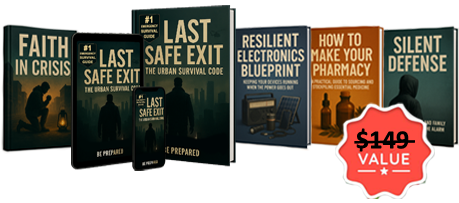
The first aid bonus content addresses one of the most important and most commonly neglected dimensions of urban crisis preparedness — the medical emergency response capability that becomes critically important when professional healthcare systems are overwhelmed or inaccessible during major crises. The content covers trauma management fundamentals (wound assessment, bleeding control, basic life support, fracture management), improvised medical supply preparation and use (creating effective bandaging, splinting, and wound care from available urban materials), chronic condition management during crisis (medication supply management, alternative management approaches for conditions whose standard pharmaceutical treatment may be disrupted), and preventative health practices that reduce the illness and injury risk that crisis conditions elevate.
The improvised medical supply content is particularly valuable for the scenario that most medical preparedness planning neglects — not the scenario where the user’s pre-positioned first aid kit is available and adequate, but the scenario where the emergency occurred at a location or under conditions that made the pre-positioned kit unavailable and where effective medical response must be improvised from what is at hand. The capacity to improvise effective medical response from available urban materials — as the Urban Survival Code teaches — significantly extends the medical preparedness capability beyond the equipment the user has specifically purchased and stored.
Alternative Communication and Community Building
The communication bonus content addresses the infrastructure dependency vulnerability that most urban residents least anticipate — the failure of normal communication systems (cellular, internet, landline) whose overload or physical damage during major crises is historically common and whose failure leaves isolated households without the situational awareness, coordination capability, and external support access that effective crisis management requires.
Off-grid communication tools — ham radio, satellite communication devices, and the specific protocols for their effective use in a post-crisis communication environment — provide the communication capability redundancy that community coordination and emergency service access require when normal systems fail. The neighborhood preparation group formation guidance teaches the pre-crisis community building that transforms an aggregate of individually isolated households into a mutually supporting community whose shared resources, skills, and coordinated response dramatically improves every member’s survival capacity — and that must be established before the crisis rather than attempted in the chaos of its immediate aftermath.
Skills Taught in the Urban Survival Code: A Comprehensive Overview
72-Hour Emergency Planning
The 72-hour emergency plan — the specific, documented, household-tested plan for how the user’s family will respond to the first three days of a major emergency — is the most important single preparedness output that the Urban Survival Code’s training produces. The program teaches a structured 72-hour planning framework that covers the specific elements whose absence is most costly during the critical window: established family communication and meeting protocols that function when cellular networks are overloaded, pre-positioned water and food supplies calibrated to the household’s actual consumption requirements, identified shelter options for both shelter-in-place and evacuation scenarios, designated family roles and decision-making authority, and the emergency document and resource kit that provides the identity, financial, and medical information access that crisis navigation typically requires.
Long-Term Sustainability Methods
Beyond the 72-hour critical window, the Urban Survival Code teaches the long-term sustainability methods that extended crisis periods require — the systematic approaches to ongoing water procurement and purification, food production supplementation (container gardening, urban foraging, community food sharing networks), energy independence (solar charging, alternative cooking methods), and community coordination that convert temporary crisis survival into sustainable extended-disruption management.
Psychological Resilience and Family Crisis Management
The psychological preparedness content — stress management techniques for high-pressure decision environments, cognitive reframing strategies for maintaining functional optimism under crisis conditions, the specific family communication approaches that prevent panic-driven decision-making and maintain household coordination under stress — addresses the dimension of crisis survival that purely tactical preparedness programs most often neglect and that experienced emergency responders consistently identify as the most important determinant of effective crisis management.
The family crisis management component is particularly valuable for households with children — teaching the specific approaches to child preparedness education that convey necessary emergency information without generating counterproductive fear responses, the family role assignment frameworks that give children age-appropriate emergency responsibilities that contribute to household function while providing the sense of agency that reduces fear, and the family emergency practice protocols that build the habitual response patterns whose reliability under stress depends on prior rehearsal.
Benefits of the Urban Survival Code: What You Can Realistically Expect
Comprehensive Preparedness Coverage Replacing Multiple Separate Resources
The Urban Survival Code’s three-module core structure with supplementary bonus content provides the full spectrum of urban crisis preparedness knowledge — threat assessment, resource security, personal defense, medical response, communication, and psychological resilience — in a single integrated program. This integrated coverage eliminates the patchwork preparedness approach that most people assemble from disparate internet resources, general wilderness survival guides, and periodic emergency preparedness news coverage — a patchwork that typically overweights certain topics (food storage is the most commonly over-focused single topic in self-directed preparedness) while leaving systematic gaps in others (water, medical response, and community coordination are the most commonly neglected).
A Structured Learning Progression for Beginners
The most important practical benefit for beginners — the majority of the program’s target users who have preparedness intention but limited prior preparedness action — is the structured learning progression that converts the overwhelming complexity of comprehensive crisis preparedness into a manageable, prioritized, sequential series of concrete actions. The first week’s focus on honest readiness assessment and gap identification, the module progression that builds from threat awareness through resource security through defense capability, and the supplementary content that deepens specific skill areas after the foundational modules are established — this learning structure provides the momentum and direction that preparedness beginners most need and most commonly lack.
Improved Confidence and Reduced Anxiety Around Emergency Scenarios
The psychological benefit of genuine preparedness — the reduction in background anxiety about emergency vulnerability that systematic preparation produces — is both real and practically meaningful. Research on preparedness psychology consistently finds that the most significant emotional benefit of emergency preparation is not the reduction in actual emergency probability (preparation does not prevent disasters) but the reduction in the psychological vulnerability and anxiety that genuine unpreparedness produces in people who understand their exposure but have not addressed it. The Urban Survival Code’s systematic skill and knowledge development produces the genuine preparedness capability that confident reduced-anxiety outcomes require — unlike generic emergency preparedness checklist completion that produces the appearance of preparation without the substance.
Practical Family Safety Infrastructure
The 72-hour emergency plans, family communication protocols, established resource reserves, and documented family emergency roles that the Urban Survival Code’s training produces are tangible household infrastructure investments — not abstract knowledge but specific plans, procedures, and resources that provide genuine protective value in any emergency scenario the household faces, from a local power outage through a regional natural disaster. This practical infrastructure development is the most lasting benefit of the program’s systematic preparedness approach.
Community Connection and Ongoing Learning
The program’s community access component provides ongoing preparedness learning, peer support, and resource sharing beyond the formal program content — connecting users with other preparedness-focused individuals whose collective experience, local knowledge, and mutual support extends the preparedness value significantly beyond the program’s formal training scope. In the preparedness community, peer learning — the sharing of what has and has not worked in real implementation — is among the most valuable sources of practical knowledge, and the program’s community access provides a structured channel for this peer learning.
Real Urban Survival Code — Customer Reviews
Real stories from people who stayed safe, calm, and prepared when it mattered most
“When the riots started two blocks from my apartment, I didn’t panic. I followed the plan. I secured my space, stayed quiet, and waited it out. Nothing happened to me — but my neighbors weren’t so lucky.”
“Our fridge died during a heat wave, and food spoiled fast. I followed Daniel’s guide step by step — and we didn’t miss a single meal. That moment changed everything for me.”
“I thought I was prepared — until the water got shut off in the middle of winter. This guide gave me 3 backup solutions I never would’ve thought of. My wife and I are now stocking up based on everything we’ve learned.”
Urban Survival Code Pros & Cons Analysis
Urban Crisis Preparedness | Three-Module Core System | 72-Hour Planning Framework
Pros 10 Benefits
- Three-module core structure with supplementary bonus content provides comprehensive urban crisis preparedness coverage across threat assessment, resource security, defense, medical response, communication, and psychological resilience
- Urban-specific content designed for the city apartment and suburban home environments that most American households actually inhabit during emergencies — not wilderness survival content inappropriately applied to urban scenarios
- 72-hour emergency planning framework provides the most immediately actionable preparedness output as a concrete first deliverable
- Accessible for beginners without prior survival or emergency response training — structured progression builds from foundational to advanced
- Psychological preparedness and family crisis management content addresses the most commonly neglected dimension of emergency preparedness programs
- Bonus content on advanced first aid and alternative communication extends coverage into specialized areas with high practical crisis value
- Community access provides ongoing peer learning, local knowledge sharing, and mutual support beyond the formal program content
- Satisfaction money-back guarantee provides financial protection for the evaluation period
- Works for all experience levels from complete beginners to experienced preppers seeking to systematize their urban-specific preparation
Cons 4 Limitations
- Specific pricing and package details require checking the official website — not universally disclosed in third-party review contexts
- Full benefit realization requires consistent engagement over weeks to months — not a passive one-time reading experience
- The time investment required to develop the specific plans and acquire the resources the program recommends varies significantly by household situation
- Specific community support quality may vary with the active membership level at any given time
Quick Verdict
Urban Survival Code delivers a comprehensive urban-specific preparedness system with 10 major benefits including psychological resilience training, community access, and a 72-hour planning framework. The program is accessible for beginners while offering depth for experienced preppers. However, full benefits require weeks to months of active engagement, and pricing details require visiting the official website. Best suited for urban and suburban households seeking a structured, actionable approach to crisis preparedness rather than a passive reference guide.
Urban Survival Code Review Podcast
Is the Urban Survival Code Safe?
The Urban Survival Code is a preparedness education program — its content teaches skills and strategies for crisis survival rather than advocating any activities that create physical risk in their own right. The program’s approach throughout its self-defense, home security, resource acquisition, and medical response content consistently emphasizes safety — proportionate response, legal awareness, proper handling protocols for the materials and techniques it discusses, and explicit guidance on the limits of the program’s content as a substitute for professional training in specific domains (medical emergencies beyond basic first aid, for example, appropriately require professional emergency medical response).
The program’s water purification and food safety content includes specific guidance on the potential hazards of improper purification and the specific chemical and biological risks of improperly treated urban water sources — safety integration appropriate for content that involves real consequences if the techniques are applied incorrectly. The improvised medical supply content similarly includes guidance on the limits of improvised care and the specific situations that require professional medical response rather than management with improvised resources.
The psychological preparedness content is specifically developed to address crisis preparedness in a way that builds practical readiness without generating the counterproductive fear and anxiety that poorly calibrated preparedness content can produce — and the children’s preparedness section specifically addresses how to educate children about emergency scenarios in age-appropriate ways that build confidence rather than fear.
Who Should Use the Urban Survival Code?
The Urban Survival Code is specifically designed for and best suited for the following individuals.
Urban apartment dwellers and suburban homeowners whose living environment is the standard American urban or suburban residential context — and who want preparedness training specifically designed for that context rather than for the rural homestead or wilderness scenario that most mainstream survivalist content addresses.
Family preparedness coordinators — the household member who has taken responsibility for ensuring that the family is genuinely prepared for emergencies — who want a comprehensive, structured program that covers the full spectrum of family crisis preparedness from 72-hour planning through long-term resource sustainability through family emergency role assignment and crisis communication protocols.
Preparedness beginners who have the intention and motivation to prepare but have found the overwhelming complexity of comprehensive preparedness — the volume of information, the apparent cost, the difficulty of prioritizing among competing recommendations — to be the barrier preventing translation of intention into action, and who need the structured learning progression that converts complexity into manageable, prioritized steps.
Experienced preppers focused on systematizing and extending urban-specific preparation who have significant preparedness knowledge and resources already established but who recognize that their preparation was developed primarily around generic or wilderness-oriented content and who want the specifically urban-adapted content that the Urban Survival Code provides.
Adults responsible for the safety of elderly or vulnerable family members in urban environments whose physical limitations or social isolation create specific preparedness challenges that general household preparedness planning must specifically address.
Who should consider additional resources or professional training alongside the program: Individuals seeking professional-grade emergency medical training (EMT, wilderness first responder certification) as a preparedness investment should pursue professional certification programs alongside the Urban Survival Code’s first aid content. Individuals in jurisdictions with specific emergency preparedness requirements — certain professional or residential contexts — should review official jurisdiction-specific emergency management guidance alongside the program’s general preparedness framework.
Pricing and Guarantee
Urban Survival Code offers multiple package options that allow buyers to select the level of content access and support that best fits their specific preparedness goals and budget. The current pricing, available packages, and any active promotional offers are available on the official website — prospective buyers should check the official website directly for current pricing as promotional pricing may vary from listed standard prices.

Where to Buy Urban Survival Code
Urban Survival Code is available exclusively through the official website — the only source that guarantees authentic program content with the complete module, bonus guide, community access, and ongoing update components that the program’s full value requires. Official website purchase also ensures full eligibility for the satisfaction money-back guarantee and access to the customer support that assists users with program navigation and content application questions. Third-party resale sources cannot guarantee the authentic content, community access, or guarantee coverage that official purchase provides.
Is Urban Survival Code Legit or a Scam?
Based on our comprehensive evaluation, the Urban Survival Code is a legitimate, practically relevant, and well-structured digital preparedness training program whose three-module core structure with supplementary bonus content delivers genuinely valuable, urban-specifically appropriate crisis preparedness knowledge and skill development — it is not a scam.
The program’s strengths are its urban-specific content focus that distinguishes it from the wilderness-oriented survival content that dominates most preparedness resources, its comprehensive coverage across the full spectrum of crisis preparedness dimensions that most programs address only partially, its structured learning progression that makes comprehensive preparedness manageable for beginners without overwhelming experienced users, its psychological preparedness and family crisis management content that addresses the most commonly neglected dimension of emergency preparation, and its community access that extends the program’s value through ongoing peer learning beyond the formal content. The satisfaction money-back guarantee provides the appropriate financial protection for evaluation, and the creator team’s practitioner background in urban emergency response is reflected in the practical, real-world-oriented content throughout.
Final Verdict
The Urban Survival Code is a comprehensive, practically oriented, and well-structured urban crisis preparedness training program whose three-module core — Urban Threat Assessment for personalized risk profiling and situational awareness development, Resource Acquisition for water security, food storage, and 72-hour emergency planning, and Defense Protocols for personal protection and home security — supplemented by advanced first aid and alternative communication bonus content and ongoing community support provides the most complete urban-specific crisis preparedness training available in a single accessible digital program.
The program’s most important contribution is its recognition that urban survival is a distinct discipline requiring specifically urban knowledge — that the city apartment and suburban neighborhood survivor faces challenges fundamentally different from wilderness survival scenarios, and that genuine urban crisis preparedness requires specifically urban solutions rather than wilderness survival techniques awkwardly adapted to contexts they were not designed for. This urban-specificity runs throughout every module — the water sourcing from urban infrastructure, the space-efficient food storage for apartment dwellers, the high-density neighborhood security protocols, the urban communication network building — and reflects the genuine practitioner experience with urban emergency scenarios that the program’s content quality demonstrates.
The structured learning progression that converts comprehensive preparedness from an overwhelming aspiration into a manageable sequence of concrete, prioritized actions is the practical feature that most benefits the preparedness beginners who represent the majority of the program’s target audience — and the depth of content in each module ensures that experienced preppers find substantive value in the urban-specific content that their previous wilderness-oriented preparation left unaddressed. The community access feature’s peer learning value, the psychological preparedness content’s genuine novelty relative to most preparedness programs, and the family crisis management framework’s practical household application together make the Urban Survival Code a more comprehensive and more practically applicable preparedness investment than its categorical description as a “survival guide” suggests.
For any urban or suburban adult who has the preparedness intention but not yet the preparedness substance — who knows they should have a plan and the skills to execute it but has not yet built either — the Urban Survival Code provides the structured, comprehensive, urban-appropriate training that translates that intention into genuine readiness. The satisfaction money-back guarantee, the official website purchase protection, and the multiple package options that accommodate different preparedness goals and investment levels make it a well-protected and accessible starting point for the preparedness investment that the current risk environment makes increasingly difficult to justify deferring.
Frequently Asked Questions
Urban Survival Code
“If Urban Survival Code is so powerful, why haven’t I heard of it before?”
There’s a reason.
Urban Survival Code was never meant for the public.
It’s a survival plan developed initially for military continuity plans during full-scale infrastructure collapse scenarios.
And while over 97,000 families across the U.S. are already using Urban Survival Code to protect their homes, most don’t talk about it — because when SHTF, silence means security.
“Is this hard to set up?”
Not at all.
Urban Survival Code isn’t some complicated gadget or expensive gear. It’s a step-by-step survival blueprint designed for regular families, not elite soldiers.
You don’t need military experience, bug-out shelters, or fancy gear. All you need is the ability to follow simple instructions and make a few smart decisions before it’s too late.
Every part of the plan is laid out clearly — from what to stock, where to hide it, how to protect your home, and even what most Americans forget until it’s too late.
And if you’re short on time? Delegate it. Have someone help you go through it or handle the action steps for you. Either way, once you go through Urban Survival Code, you’ll know exactly what to do when you need.
“How long will this take me?”
Less than a movie night.
The core Urban Survival Code is delivered in a fast-paced, easy-to-follow video training — it takes about 30–40 minutes to go through.
Once you finish, you’ll know exactly what steps to take.
And implementing the plan? That’s up to you, but many people complete their essential preparations in just 1 weekend. No guesswork. No fluff. Just results.
“What will this cost me to implement?”
A lot less than your next grocery run.
Most families can follow the Urban Survival Code and complete the first crucial phase of their survival setup for under $60, using items from local stores or stuff you already have at home.
You don’t need bunkers, expensive gadgets, or prepper subscriptions.
Urban Survival Code focuses on low-cost, high-impact actions that actually work when supply chains fail, riots break out, or the grid goes down.
You can scale your setup as your budget allows, but the core system costs less than dinner for two.
“I’m Ready! How Do I Get Started?”
Simply click on the “Buy Now” button you see below.
You’ll then be taken to my 100% secure checkout page, where you’ll enter your order information.
Scientific References
Urban disaster risk, emergency preparedness, water infrastructure, food security, and community resilience
FEMA Natural Disaster Risk
National Risk Index for Natural Hazards — urban population exposure
FEMA: National Risk Index72-Hour Critical Window
Disaster mortality — emergency management research and policy
PMID: 19960646Urban Water Infrastructure Vulnerability
Natural disaster scenarios — AWWA research
AWWA: Water Resiliency Guide (PDF)Chemical Agent Safety
Emergency response chemical guidance (referenced for water purification chemistry principles)
CDC NIOSH: Chemical AgentsEmergency Preparedness Psychology
Effects on disaster anxiety — Journal of Anxiety Disorders
PMID: 23276699Community Social Cohesion
Disaster recovery outcomes — Disaster Medicine and Public Health Preparedness
PMID: 22417867Urban Food Security
Extended supply chain disruption — Journal of Hunger and Environmental Nutrition
PMID: 25076993DIY Water Filtration
Urban emergency water treatment effectiveness — WHO emergency guidance
WHO: Water Quality GuidelinesOff-Grid Communication Resilience
Urban disaster scenarios — FCC emergency communications research
FCC: Emergency Communications