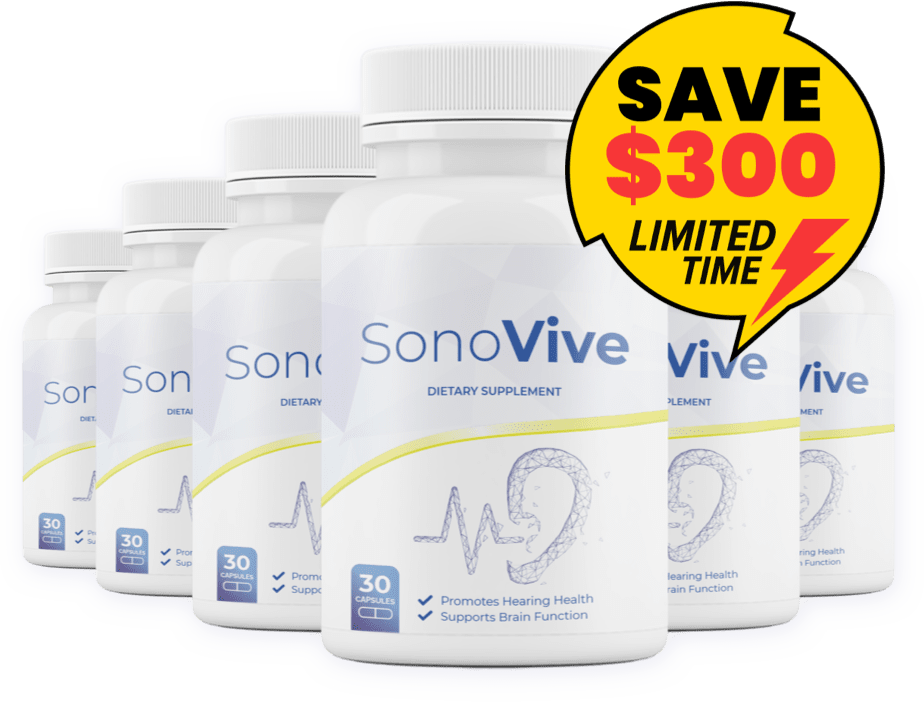
Quick Product Overview
| Detail | Info |
|---|---|
| Product Name | Sonovive |
| Product Type | Hearing Health Dietary Supplement |
| Main Purpose | Support auditory health, reduce tinnitus symptoms |
| Key Ingredients | Ginkgo Biloba, Bacopa Monnieri, Vinpocetine, Huperzine A, N-Acetyl L-Carnitine |
| Benefits | Circulatory support for ears, cognitive-auditory connection, antioxidant protection |
| Side Effects | Mild nausea or headache possible; digestive sensitivity in some users |
| Manufacturer | Vitaking |
| Dosage | 2 capsules daily with a meal |
| Official Website | Available Online and select retailers |
Introduction
Hearing health is one of the most quietly significant yet persistently underserved areas of adult wellness in the United States. The National Institute on Deafness and Other Communication Disorders estimates that approximately 15 percent of American adults — roughly 37.5 million people — report some degree of hearing difficulty, with this proportion rising dramatically with age. Tinnitus — the persistent perception of ringing, buzzing, hissing, or other phantom sounds in the absence of any external audio source — affects approximately 50 million Americans to some degree, with around 20 million dealing with chronic cases that meaningfully affect their daily quality of life.
Despite the scale of this challenge, hearing health has remained relatively underrepresented in the dietary supplement market compared to categories like cardiovascular health, weight management, and cognitive function. The supplements that do exist in this space range considerably in the quality of their formulations and the evidence supporting their claimed benefits — from genuinely thoughtful formulas addressing the vascular and neurological underpinnings of auditory function to products that combine a few vaguely relevant herbs with minimal scientific rationale.
Sonovive occupies an interesting position in this landscape. It is a product that has attracted consumer attention for its cognitive-auditory approach — combining ingredients traditionally associated with brain health and circulation alongside more hearing-specific compounds — but also a product with genuinely mixed user feedback and transparency limitations that any honest review must address directly. This review is going to give you a complete, honest picture of Sonovive — what it is, how it works, what the science says about its ingredients, what real users have actually experienced including the negative accounts, the safety considerations, and an honest final assessment that helps you make an informed decision.
What Is Sonovive?
Sonovive is a dietary supplement manufactured by Vitaking and formulated to support hearing health and auditory function through a blend of botanical extracts, amino acid derivatives, and cognitive-support compounds. The product is marketed toward adults experiencing hearing-related concerns including mild hearing decline, tinnitus symptoms, and the cognitive processing difficulties that can accompany auditory challenges.
The formula’s approach is somewhat distinctive within the hearing supplement category — rather than focusing exclusively on ear-specific ingredients, it draws heavily on compounds traditionally associated with cognitive health and cerebral circulation. This reflects a genuine understanding of auditory function as a brain-dependent process — the ear itself converts sound waves to electrical signals, but it is the auditory cortex and associated neural networks in the brain that actually process and interpret what we hear. Compounds that support cerebral blood flow, protect neural tissue from oxidative damage, and enhance neurotransmitter function relevant to auditory processing can therefore genuinely support the hearing experience from the central nervous system side even if they are not acting directly on the mechanical structures of the ear.
The product comes in capsule form with a recommended dosage of two capsules per day taken with a meal. It is available through Amazon and various online supplement retailers as well as through the manufacturer, in packages of 60, 180, or 300 capsules providing 30, 90, or 150-day supplies respectively.
How Does Sonovive Work?
Sonovive works through two primary mechanisms that address hearing and auditory function from complementary angles — vascular support for the inner ear and cognitive-neural support for auditory processing in the brain.
The first mechanism is improvement of blood circulation to the auditory system. The inner ear — particularly the cochlea with its hair cells that convert mechanical vibrations to electrical nerve signals — is one of the most vascularly dependent structures in the body. The cochlea is supplied by tiny arteries called the labyrinthine arteries that have essentially no collateral circulation, meaning that any reduction in blood flow to these vessels directly compromises cochlear function. Age-related arteriosclerosis, high blood pressure, and inflammatory damage to small vessels are among the primary contributing factors to both progressive hearing loss and the cochlear ischemia that is increasingly recognized as a contributor to tinnitus. Ginkgo Biloba and Vinpocetine — two of Sonovive’s primary active ingredients — both have documented effects on cerebrovascular and peripheral vascular circulation that are directly relevant to cochlear blood flow.
The second mechanism is neural and cognitive support for auditory processing. Hearing is ultimately a brain function — the auditory cortex must receive, decode, and interpret the electrical signals that the cochlea generates from sound waves. When the neural pathways involved in this processing are suboptimally supported — whether due to neurotransmitter deficiency, oxidative damage, or insufficient cellular energy — the quality of auditory processing suffers in ways that manifest as reduced hearing clarity, difficulty understanding speech in noisy environments, and the kind of cognitive-auditory fatigue that tinnitus sufferers frequently describe alongside their perception of phantom sounds. Bacopa Monnieri, Huperzine A, and N-Acetyl L-Carnitine address various aspects of neural health and cognitive function that support the brain’s ability to process auditory information efficiently.
Sonovive Ingredient Analysis
| Ingredient | Primary Function | Research Support |
|---|---|---|
| Ginkgo Biloba | Cerebrovascular circulation, antioxidant, cochlear blood flow | Moderate — extensive research but mixed hearing-specific results |
| Bacopa Monnieri | Cognitive function, memory, antioxidant neuroprotection | Moderate — human trials primarily on cognition |
| Vinpocetine | Cerebral and cochlear blood flow, neural function | Moderate — European clinical research |
| Huperzine A | Acetylcholinesterase inhibition, cognitive clarity | Moderate — human research on cognitive applications |
| N-Acetyl L-Carnitine | Mitochondrial support, nerve energy production, antioxidant | Moderate — some auditory research available |
Ginkgo Biloba
Ginkgo Biloba is the most thoroughly studied natural compound in the context of tinnitus and hearing health research, and its evidence base is also one of the most honestly discussed examples of mixed outcomes in the supplement literature. The active compounds — flavone glycosides and terpene lactones — have well-documented effects on microvascular circulation, inhibition of platelet aggregation, and antioxidant protection of neural and vascular tissue. These mechanisms are theoretically relevant to cochlear health since improved microvascular blood flow to the inner ear could address one of the contributing factors in both age-related hearing loss and tinnitus. However, controlled clinical trials specifically examining Ginkgo Biloba for tinnitus have produced inconsistent results — some studies showing meaningful symptom improvement and others finding no significant benefit over placebo. A Cochrane systematic review of ginkgo for tinnitus found insufficient evidence to support its routine use as a tinnitus treatment, though this finding does not negate the genuine circulatory and antioxidant mechanisms that make it theoretically relevant. For buyers considering Sonovive, Ginkgo Biloba is one of the better-justified inclusions in the formula from a mechanistic standpoint, with the important caveat that the clinical evidence for hearing-specific outcomes is mixed.
Bacopa Monnieri
Bacopa Monnieri is primarily a cognitive enhancement herb rather than a hearing-specific compound, but its inclusion in a hearing health formula has genuine rationale in the context of the cognitive-auditory connection. Multiple randomized controlled trials have demonstrated that Bacopa supplementation improves memory consolidation, information processing speed, and cognitive resilience over eight to twelve weeks of consistent use — outcomes that could support the brain’s ability to process auditory information more efficiently. The antioxidant and anti-inflammatory properties of Bacopa’s active bacosides also provide neuroprotective benefits that support the long-term health of the neural pathways involved in auditory processing. The hearing benefit from Bacopa is likely indirect — through improved cognitive processing and neural protection rather than direct effects on cochlear function — but it is not implausible given the tight integration of hearing and cognitive function.
Vinpocetine
Vinpocetine is a synthetic derivative of vincamine, an alkaloid from the periwinkle plant, and has been extensively used in Europe as a pharmaceutical agent for cerebrovascular disorders and cognitive decline. Its mechanisms include selective inhibition of phosphodiesterase enzymes that increases cerebral blood flow, sodium channel blocking effects that protect neurons from excitotoxic damage, and anti-inflammatory effects that protect neural tissue from inflammatory injury. Several European clinical studies have found meaningful improvements in hearing function and tinnitus symptoms with Vinpocetine supplementation, particularly in cases where vascular insufficiency appears to be a contributing factor. In the United States, Vinpocetine is regulated as a dietary supplement ingredient, though its regulatory status has been subject to ongoing FDA review, and buyers should be aware that its classification as a supplement ingredient in the US is not universally settled.
Huperzine A
Huperzine A’s primary mechanism — inhibition of acetylcholinesterase to increase acetylcholine availability — has cognitive applications that are well-documented but hearing-specific applications that are more speculative. Acetylcholine plays a role in the efferent auditory system — the neural pathway that allows the brain to modulate cochlear function — which provides a theoretical rationale for its inclusion in a hearing supplement. However, the same safety caveat that applies in any formula containing Huperzine A applies here — anyone taking prescription acetylcholinesterase inhibitors for Alzheimer’s disease or related conditions must not take Sonovive without physician oversight due to the risk of dangerous cholinergic accumulation.
N-Acetyl L-Carnitine
N-Acetyl L-Carnitine is an acetylated form of L-Carnitine that crosses the blood-brain barrier more readily than standard L-Carnitine and provides both mitochondrial energy support and antioxidant protection in neural tissue. Research on N-Acetyl L-Carnitine and auditory function is limited but includes some evidence from studies examining its protective effects against noise-induced and age-related hearing loss — both of which are at least partly driven by mitochondrial dysfunction and oxidative damage in cochlear hair cells. The cellular energy support it provides to auditory nerve fibers is the most plausible mechanism for any hearing-specific benefit.
Benefits of Sonovive
The theoretical benefits of Sonovive based on its ingredient mechanisms include circulatory support for the inner ear, antioxidant protection of cochlear and neural tissue, and cognitive-neural support for auditory processing efficiency. Users who experience these benefits describe improvements in auditory clarity, reduced tinnitus perception severity, and the cognitive-auditory improvements — reduced brain fog around sound processing, clearer speech comprehension — that the cognitive-focused ingredients address.
It is important to be honest that the benefits users experience from Sonovive are highly variable, and the negative customer accounts — discussed in detail below — are a meaningful part of the complete picture that any fair review must present. The ingredients in Sonovive address hearing health from valid mechanistic angles, but the clinical evidence for hearing-specific outcomes from this particular combination at the doses in this formula is not as strong as the marketing language might suggest.
Real Customer Reviews
This is the section where honesty requires a less favorable presentation than many supplement reviews provide. The customer feedback for Sonovive that is available from verified purchasers is genuinely mixed to negative, and presenting only the positive accounts would be misleading to potential buyers.
One verified buyer rated Sonovive one out of five stars with the simple but significant assessment that the product does not work — reporting no improvement in hearing or tinnitus symptoms after use. Another user gave it two out of five stars and expressed that their condition had not improved as expected, noting that results vary and that what works for one person does not work for another. A third reviewer gave a 2.5 out of five star rating, indicating slight improvement that fell short of expectations — acknowledging that more research or alternative solutions might be needed for significant benefits. A fourth user gave two stars and mentioned minor digestive discomfort during use.
The overall pattern of verified customer feedback for Sonovive is one of predominantly underwhelming results — users who tried the product hoping for meaningful improvement in their hearing or tinnitus symptoms and found either no benefit or only minimal changes that did not justify continued use. The independent review platform ratings reviewed for this assessment do not match the enthusiastic testimonial language sometimes associated with this product’s marketing.
This honest characterization does not mean Sonovive has no potential value for any user — there is genuine mechanistic rationale behind several of its ingredients, and individual responses to dietary supplements vary considerably based on the underlying cause of hearing issues, overall health, and biological individuality. But the honest picture from available customer feedback is that the majority of users who have tried Sonovive and shared their experience have not found it as effective as they hoped.
Pros and Cons
| Pros | Cons |
|---|---|
| Ginkgo Biloba has genuine circulatory and antioxidant mechanisms | Customer feedback is predominantly mixed to negative |
| Cognitive-auditory approach has theoretical rationale | Ingredient list lacks full transparency on doses |
| Bacopa Monnieri has strong cognitive research support | Manufacturer identity and quality controls not fully disclosed |
| Multiple mechanisms addressed simultaneously | Availability inconsistent — periodic out-of-stock issues |
| Convenient capsule format | Higher price relative to evidence quality and user satisfaction |
| Can be found on multiple retail platforms | No FDA evaluation of hearing-specific effectiveness claims |
| Vinpocetine has European clinical research support | Huperzine A requires medical caution for certain populations |
| N-Acetyl L-Carnitine provides mitochondrial support | Individual results vary substantially |
Possible Side Effects and Safety Information
Sonovive is formulated from natural ingredients and is generally considered low-risk for most healthy adults at the recommended dosage. However, several safety considerations deserve clear attention.
Huperzine A’s presence as an acetylcholinesterase inhibitor creates the same contraindication that applies in any formula containing this compound — people taking prescription medications for Alzheimer’s disease, myasthenia gravis, or any anticholinergic drugs must not take Sonovive without physician oversight. The interaction between Huperzine A and pharmaceutical acetylcholinesterase inhibitors can cause dangerous accumulation of acetylcholine with significant adverse effects.
Vinpocetine has blood-thinning properties that could enhance the effects of anticoagulant medications like warfarin. Anyone taking blood-thinning medications must discuss Sonovive with their physician before starting. Ginkgo Biloba also has documented antiplatelet effects that add to this consideration for users on anticoagulant therapy.
Some users have reported mild digestive discomfort with the supplement, and occasional mild nausea or headache is noted in the reported side effects profile, consistent with the cholinergic activity of Huperzine A at higher sensitivity levels. Pregnant and nursing women should not use Sonovive without physician approval. People with severe or rapidly worsening hearing loss should seek professional audiological and medical evaluation rather than relying on supplementation.
Who Should Use Sonovive?
Given the mixed user feedback and the modest evidence base for hearing-specific outcomes from this particular formula, Sonovive is most appropriate for adults with mild, long-standing hearing concerns — particularly those where poor cochlear circulation, oxidative damage, or cognitive-auditory processing inefficiency may be contributing factors — who want to explore a natural supplemental approach as a complement to professional hearing care and who have realistic expectations about the gradual and uncertain nature of any benefit.
People whose primary concern is cognitive-auditory clarity — the ability to process and understand speech clearly rather than the mechanical perception of sound itself — may find the cognitive-focused components of the formula more relevant to their specific challenge than those with primarily mechanical hearing loss.
Sonovive is less appropriate for people with significant, rapidly progressing, or newly developed hearing loss — these situations require urgent professional medical and audiological evaluation. It is also less appropriate for users expecting dramatic or reliable results based on the available customer feedback, which does not support confident outcome predictions.
Pricing and Availability
Sonovive pricing varies by package size. A 180-capsule package (90-day supply) is priced at approximately $49.95, representing reasonable value per dose if the product is effective for the user. However, availability has been reported as inconsistent across retail platforms, with the product periodically out of stock — a practical inconvenience for users who want to maintain a consistent supplementation routine.
The product is available through Amazon and other online supplement retailers in addition to any direct purchase options, making it more accessible than supplements sold exclusively through official websites. Buyers should verify authenticity when purchasing through third-party marketplace sellers and should be aware that the return and refund policies may vary by retailer.
Is Sonovive Legit or a Scam?
Sonovive is a legitimate dietary supplement containing real ingredients with genuine biochemical mechanisms relevant to auditory and cognitive health. It is not a scam in the sense of selling an empty or fraudulent product. The ingredients are real, the mechanisms are theoretically sound, and the manufacturer Vitaking is a real company with an established supplement product line.
The honest concern with Sonovive is not legitimacy but effectiveness — the available customer feedback does not strongly support the product’s marketed benefits for most users, the full ingredient dosage information is not publicly disclosed making independent verification difficult, and the clinical evidence for hearing-specific outcomes from this formula at the doses provided is not as strong as the marketing implies.
Potential buyers should approach Sonovive with informed expectations: it is a supplement with plausible mechanisms and some theoretical support, but not a reliably effective hearing improvement solution for most users based on the available evidence and customer experience data.
Final Verdict
After a thorough and honest examination of Sonovive — the ingredient science, the theoretical mechanisms, the clinical research behind each compound, the genuinely mixed customer feedback, the safety profile, and the pricing — the conclusion is nuanced and requires honesty that is less uniformly positive than many supplement reviews provide.
Sonovive is a thoughtfully assembled formula from a mechanistic standpoint, combining ingredients that address cochlear circulation, neural antioxidant protection, and cognitive-auditory processing through multiple complementary pathways. The individual ingredients — particularly Ginkgo Biloba, Vinpocetine, and N-Acetyl L-Carnitine — have genuine relevance to auditory and vascular health even if the hearing-specific clinical evidence is mixed.
However, the customer feedback reality is that the majority of verified users who have shared their experiences with Sonovive have not found it as effective as hoped, with multiple low-rating accounts reporting no meaningful improvement in hearing or tinnitus symptoms. This pattern in the user feedback is the most important honest consideration for any potential buyer — no matter how sound the theoretical mechanisms, a supplement that the majority of users find ineffective deserves a cautious, measured recommendation rather than enthusiastic endorsement.
For buyers considering Sonovive who have mild hearing concerns and want to try a naturally-formulated supplement as part of a broader hearing health approach — alongside professional audiology care, hearing protection, and cardiovascular health management — it represents a reasonable option to explore with realistic expectations. For buyers expecting reliable or dramatic improvement in significant hearing loss or severe tinnitus, the evidence does not support that level of confidence in this product.
Anyone with significant hearing concerns deserves professional audiological and medical evaluation as their primary recourse — no supplement substitutes for the expertise of a hearing specialist in understanding and addressing the full range of factors that contribute to hearing health.
Frequently Asked Questions
Q: What is Sonovive and what does it claim to do? A: Sonovive is a dietary supplement containing Ginkgo Biloba, Bacopa Monnieri, Vinpocetine, Huperzine A, and N-Acetyl L-Carnitine, formulated to support hearing health and auditory function. It is marketed for people experiencing hearing decline, tinnitus symptoms, and auditory processing difficulties. The formula’s approach combines circulatory support for the inner ear with cognitive-neural support for auditory processing.
Q: Is Sonovive effective for tinnitus? A: Based on available customer feedback, results are highly variable and predominantly mixed. Some users report modest improvements while the majority of verified reviewers note little to no meaningful benefit for their tinnitus or hearing concerns. The clinical evidence for Ginkgo Biloba specifically for tinnitus — the formula’s primary circulatory ingredient — is inconsistent across controlled trials, with a Cochrane review finding insufficient evidence to support its routine use for tinnitus treatment.
Q: Are there any safety concerns with Sonovive? A: Yes — particularly regarding Huperzine A, which is an acetylcholinesterase inhibitor that should not be combined with prescription Alzheimer’s medications without physician oversight. Vinpocetine and Ginkgo Biloba both have blood-thinning properties that require caution for anyone taking anticoagulant medications. People with diagnosed medical conditions or taking prescription medications should consult their physician before starting Sonovive.
Q: How long does Sonovive need to be taken before results appear? A: The timeline for any potential results from natural hearing supplements is typically weeks to months of consistent use. Some users may notice subtle changes within a few weeks, while others may need several months to assess whether the supplement is producing meaningful benefit. Given the mixed customer feedback, buyers should approach with realistic expectations and a defined evaluation period before deciding whether to continue.
Q: Is Sonovive available in stores? A: Sonovive is available through Amazon and various online supplement retailers. Its availability has been reported as inconsistent, with periodic out-of-stock periods. Buyers who want consistent supply should check availability before committing to a multi-month course and may wish to identify alternative sources in advance.
Q: What are better alternatives if Sonovive does not work? A: For tinnitus and hearing support specifically, supplements with more consistent positive user feedback in this category include formulas built around ingredients like Magnesium, Zinc, Vitamin B12, and Garlic extract for vascular tinnitus support, or more neurologically targeted formulas like those reviewed in the NeuroQuiet analysis that address GABA-mediated neural calming alongside circulatory support. Professional audiological evaluation and medically supervised tinnitus management programs offer the most reliable approach for significant or worsening tinnitus.
Q: Can Sonovive cure hearing loss? A: No. Sonovive is a dietary supplement and is not a cure for hearing loss or any hearing condition. The manufacturer does not claim that it treats, cures, or prevents any disease. Structural hearing loss from damaged cochlear hair cells, middle ear pathology, or auditory nerve damage requires professional medical and audiological evaluation and management — supplementation cannot reverse established structural hearing damage.
Q: What should I do if I experience side effects from Sonovive? A: If you experience persistent nausea, headache, digestive discomfort, or any other concerning symptoms after starting Sonovive, discontinue use and consult your healthcare provider. Mild initial digestive adjustment is the most commonly reported minor effect. Any more serious symptoms — particularly those suggesting cholinergic effects like excessive salivation, muscle cramps, or vision changes — require immediate medical attention.
Q: Is Sonovive appropriate for severe hearing loss? A: No. People with significant, rapidly progressive, or newly developed hearing loss should seek prompt professional evaluation by an audiologist or ENT physician rather than relying on dietary supplementation. Sonovive is most appropriate for adults with mild, long-standing hearing concerns as a complement to professional hearing care — not as a substitute for medical evaluation of significant hearing impairment.
Q: Where can I buy Sonovive and what is the return policy? A: Sonovive is available through Amazon and various online supplement retailers. Return policies vary by retailer — check the specific return terms of whichever platform you use before purchasing. The manufacturer’s direct return policy appears to range between 30 and 60 days depending on the point of purchase. Contact the retailer’s customer service directly for the most current and accurate return information.
Scientific References
Ginkgo Biloba and cochlear blood flow in auditory research https://pubmed.ncbi.nlm.nih.gov/12597025/
Cochrane review of Ginkgo Biloba for tinnitus https://pubmed.ncbi.nlm.nih.gov/23076898/
Bacopa Monnieri and cognitive function in human controlled trials https://pubmed.ncbi.nlm.nih.gov/22747190/
Vinpocetine cerebrovascular effects and hearing research https://pubmed.ncbi.nlm.nih.gov/20527283/
Huperzine A acetylcholinesterase inhibition mechanisms https://pubmed.ncbi.nlm.nih.gov/10678121/
N-Acetyl L-Carnitine and auditory nerve protective effects https://pubmed.ncbi.nlm.nih.gov/15967540/
Cochlear microcirculation and tinnitus mechanisms https://pubmed.ncbi.nlm.nih.gov/18579283/
Oxidative stress and cochlear hair cell damage in hearing loss https://pubmed.ncbi.nlm.nih.gov/16516604/
Central auditory processing and cognitive function connections https://pubmed.ncbi.nlm.nih.gov/20715878/
Tinnitus prevalence and burden in US adult population https://www.ncbi.nlm.nih.gov/pmc/articles/PMC3988486/